

By Suzanne Prouty
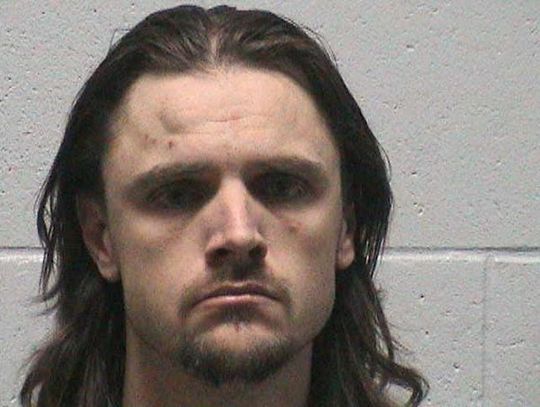
Adam Elijah Miller did not deny stabbing his father and mother at their Fernley home. The question before a Lyon County jury was whether the then-19-year-old was defending himself, as he testified, or attacking his parents, as prosecutors contended.
At about 2:40 p.m. Friday, Nov. 20, the jury returned a verdict of second-degree murder in the death of his father, Lance Miller. Under Nevada law, second-degree murder is an unlawful killing committed with malice, but without the circumstances required for first-degree murder, such as a willful, deliberate and premeditated killing.
Lance Miller, 73, died after the Dec. 18, 2024, confrontation at the family's Farm District Road home. Elizabeth Miller survived a knife wound to her neck. Adam Miller left the property and was arrested the next day after a search ended at an abandoned barn.
The search spread fear and disruption across Fernley. Authorities warned that Miller should be considered armed and dangerous, closed roads and ordered residents near Farm District Road to shelter in place. Fernley schools were locked down Wednesday, students were released only to identified guardians and buses were suspended. Schools opened Thursday under a lockout as the manhunt continued. Miller was taken into custody after more than 30 hours.
Chief Deputy District Attorney Brian Haslem and Deputy District Attorney Samantha Edmondo represented the state. Defense attorney Christopher Day represented Miller.
Deputy Arsenio Reyes testified that dispatch first reported a medical call involving a woman with a cut to her neck. The information changed to a stabbing as he headed to the house. Reyes found Lance Miller unresponsive and Elizabeth Miller injured. Deputy Sean Colosi arrived shortly afterward. Adam was gone.
Elizabeth Miller described worsening disputes with her son before the attack. She said officers had been called to the home before Dec. 18. Jurors heard about messages she wrote on a door for Adam. Some simply said no; others were longer, angry warnings about his behavior and taking things from the house.
Her memory of the attack was fragmented. She described seeing her husband bleeding heavily and trying to help him but said she could not clearly remember everything that happened because she was injured. She recalled telling Adam, “You're hurting us.” She testified that he stopped, apologized, hugged her, told her he loved her and made the first 911 call. Elizabeth Miller also called for help.
Dr. Clare Bryce, who performed the autopsy for Washoe County, classified Lance Miller's death as a homicide caused by multiple sharp-force injuries. She documented a wound that cut a carotid artery, another that punctured a lung and superficial wounds around his head and neck. Jurors also saw photographs of the house and heard testimony about blood evidence and DNA. The physical evidence showed the severity of the injuries, but the two sides disputed how the confrontation began and where the knife came from.
Adam Miller testified that Lance came at him with a knife and that he acted in self-defense. He said he stabbed Elizabeth after she came to Lance's aid. He denied acting out of anger and said he believed his parents were going to kill him. He said he called 911 and left because he was panicked and afraid.
Witnesses testified that Miller appeared frightened and cried while investigators collected DNA swabs after his arrest.
Before closing arguments, Judge John Schlegelmilch spent about an hour instructing jurors. The instructions addressed the presumption of innocence, the state's burden to prove guilt beyond a reasonable doubt, the elements of the charges, degrees of homicide, malice, premeditation, self-defense, evidence and the requirement of a unanimous verdict.
In closing, Haslem made the word “no” central to the state's case. He told jurors that deep resentment had built as Adam's parents began enforcing limits, restricting his access to the house and stopping the extras they had previously allowed. Haslem portrayed Adam as having been coddled and argued that his behavior became darker and more aggressive when his parents began telling him no.
He also challenged the claim that Lance attacked first. Haslem said no physical evidence supported Adam's account, pointed to inconsistencies in his description of the knife and noted that Adam had no defensive wounds. He cited Reyes' testimony about earlier calls to the home and argued that Adam's departure and efforts to avoid being found showed consciousness of guilt. He asked jurors to find Adam guilty of first-degree murder and the remaining charges.
For the defense, Day began with the presumption of innocence and reminded jurors that the state carried the burden of proof. He described two sharply different accounts of life in the Miller home. He argued that Elizabeth's memory was unreliable because she could not recall parts of the attack and had given differing accounts after being hospitalized.
Day portrayed the home as volatile and dysfunctional. He pointed to earlier threats, police contacts and a confrontation involving a gun as reasons Adam feared his parents. Adam's decision to call 911 did not fit the state's portrayal of a planned killing, Day argued, and running afterward could reflect fear rather than guilt.
Day asked jurors to accept self-defense and acquit Miller. He also argued that the state had not proved a willful, deliberate and premeditated killing. If jurors rejected self-defense, he said the evidence was closer to a killing committed in the heat of passion than first-degree murder. On the destruction count, he said there was no proof Adam had willfully hidden the knife. In rebuttal, prosecutors again argued that Adam's account was not believable and that nothing supported his claim that Lance attacked him.
The jury returned a verdict of second-degree murder, rather than the first-degree murder conviction sought by prosecutors.
Jurors also convicted Miller of battery with a deadly weapon against a person over 60 in connection with his mother's injuries. They acquitted him of attempted murder with a deadly weapon involving Elizabeth Miller and destruction of evidence involving the knife, which was never recovered.
Defense attorney Christopher Day said, “I appreciate the jury's thoughtful deliberation in this very difficult case. Although the result is not exactly what we wanted, I am grateful the jury did not adopt the state's narrative that this was a first-degree murder.”
Second-degree murder does not carry the death penalty under Nevada law. The statutory sentence is either life in prison with parole eligibility after 10 years or a 25-year prison term with parole eligibility after 10 years. Additional penalties may apply to the deadly-weapon allegation and the separate battery conviction.
Judge John Schlegelmilch is scheduled to sentence Miller on Jan. 25, 2027.






Comment
Comments