
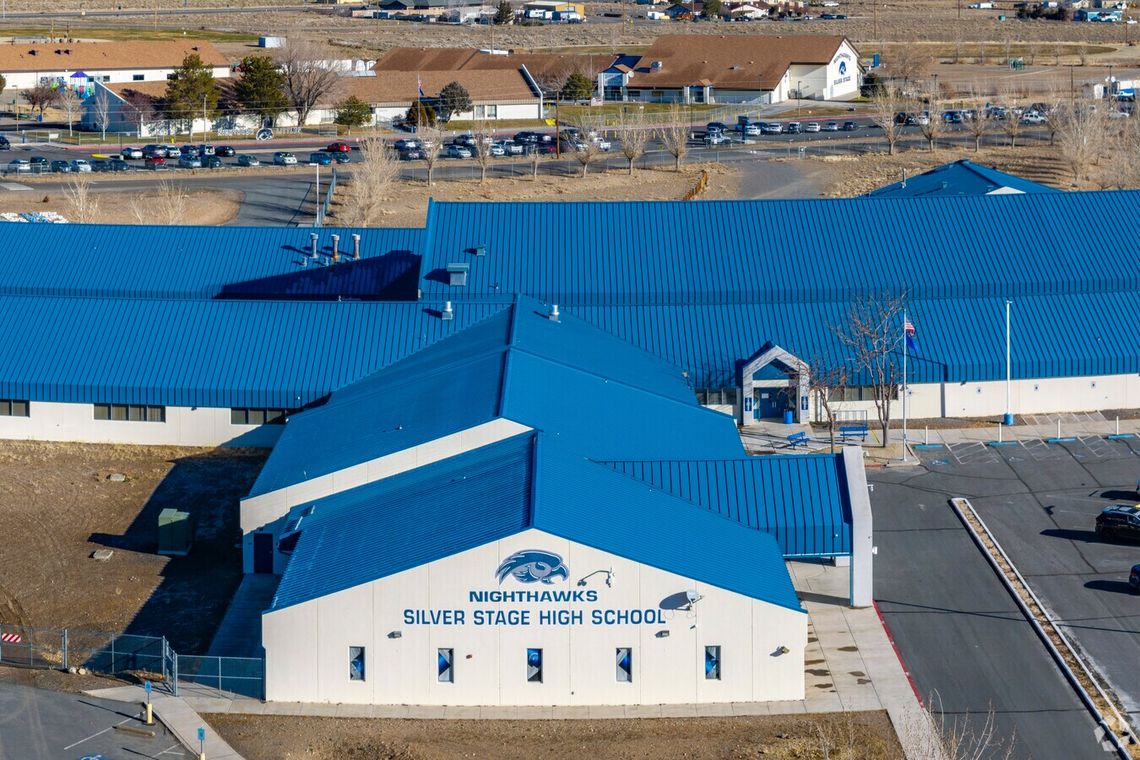
The three Silver Stage schools are working together to strengthen academic performance, expand career education and create more opportunities for students, with results ranging from significant improvements at the high school to continuing challenges with attendance and achievement at the middle school.
Principals from Silver Stage Elementary, Middle and High schools presented their annual progress reports to the Lyon County School District Board of Trustees during its Oct. 27 meeting in Silver Springs.
The presentations highlighted accomplishments from the 2025-26 school year, along with goals and programs underway this fall.
Silver Stage High School Principal Amber Cross reported that the school earned a four-star rating under the Nevada School Performance Framework, one of the district's significant academic accomplishments this year.
The school earned 70 points in the state's rating system, with improvements in graduation rates, attendance and career preparation.
The graduation rate increased from 89.5% to 93.9%, exceeding the school's goal of 92.5%.
Chronic absenteeism, which measures students missing a significant portion of the school year, dropped from 49.3% in 2024-25 to 35% in 2025-26.
Cross said the school has also expanded opportunities for students to explore careers and gain practical experience before graduation.
Work-based learning opportunities increased from 18 to 30, with student participation growing from approximately 650 to 1,100. These programs connect students with employers, career fields and hands-on learning experiences.
Among the school's other accomplishments, 74% of students in its Building Trades in Construction Technology program passed their end-of-program assessment, while 85% passed in Teaching and Training. Sixteen students earned Multi-Craft Core Curriculum certifications.
The school also reported that 11% of its 2026 graduates earned associate degrees and 27% graduated with advanced diplomas.
Not every academic measure improved. The percentage of ninth- and 10th-grade students meeting individual growth goals declined in both mathematics and English language arts.
In mathematics, 40.6% met their growth goals, compared with 42% the previous year. In English language arts, the figure declined from 51.5% to 38.5%.
Cross said improving those results remains a priority.
The principal also praised the Silver Springs community for supporting its schools, sharing the story of the school's recent homecoming football game.
Because Silver Stage High School does not have permanent stadium lights, students rarely have the opportunity to play Friday night football under the lights.
Steve Pearson of EquipmentShare helped change that for homecoming by providing portable lighting equipment and remaining on-site with his crew throughout the game.
Cross said the evening brought students, families, teachers and community members together for a memorable event.
Silver Stage Middle School is taking a new approach to eighth-grade education with the introduction of STAR Academy, a state-funded, hands-on learning program designed to increase student engagement, academic achievement and career readiness.
Principal Jed Marciniak told trustees the approximately $1 million program emphasizes project-based learning, critical thinking and practical applications of classroom instruction.
Teachers are adapting to a new curriculum and a less traditional instructional approach that gives them more flexibility to develop engaging lessons.
Marciniak said the program is intended to help address the school's academic and attendance challenges.
The middle school dropped to a one-star rating this year, with chronic absenteeism increasing from 24% to 36%.
During the 2025-26 school year, 58% of students met or exceeded their individual typical growth goals in reading, while 43% met those goals in mathematics.
The school is expanding academic interventions and providing additional support for struggling students during enrichment periods.
Career and technical education opportunities are also growing. Students are being introduced to digital design, hospitality, woodworking and agriculture, with career exploration now reaching fifth- and sixth-graders.
Marciniak said STAR Academy offers an opportunity to change how students experience school and improve their engagement with learning.
Trustee Darin Farr asked the district to track STAR Academy's eighth-grade results separately from overall school performance so trustees can determine whether the program is making a measurable difference.
The school also continues its efforts to connect families with community resources and educational activities.
Its fall festival attracted 1,339 participants, including 917 students and 422 adults, along with 40 vendors.
Additional activities include family STEM nights, career fairs, student-led conferences and work-based learning projects.
Silver Stage Elementary School Principal Erin Korf reported improvements in student achievement, including a 10% increase in English language arts proficiency and a 7% increase in mathematics proficiency on state assessments.
The school's i-Ready results also showed progress.
The percentage of students performing at early, middle or above-grade level increased from 16% to 32% in reading and from 8% to 42% in mathematics.
The school maintained its two-star rating, although Korf explained that changes in the school's English learner population affected its overall score.
Because the school no longer had enough English learners to qualify for that portion of the state assessment, it lost the opportunity to earn points in that category despite improvements in other measures.
Korf said the school gained seven points in academic growth and two points in closing achievement gaps.
The school has also expanded its early childhood program to three prekindergarten classrooms, each serving 13 children.
Six foster grandparents volunteer at the school, helping students with reading, small-group instruction and other activities.
Fourth-grade students are taking on leadership responsibilities, welcoming classmates in the morning, helping younger students and giving tours to new arrivals.
The school also received a Diamond Level MTSS Implementation Award from the Nevada Association for Positive Behavior Support network, recognizing its systems for supporting student learning and behavior.
Attendance remains a priority, with the school using family outreach, incentives and individual support to encourage regular attendance.
A recurring theme in the principals' presentations was cooperation among the three schools.
Elementary students participate in a program called "Rent a Nighthawk," allowing them to use positive-behavior reward points to spend time with high school students during lunch, recess or reading activities.
High school students also help with activities at the elementary and middle schools, while the schools coordinate community events, career education and student leadership opportunities.
Cross emphasized that the high school's success is not the work of one campus alone.
She described helping a student over several years, beginning in elementary school and continuing through middle and high school, eventually watching that student develop the skills needed to graduate.
For Cross, it illustrated the importance of educators working together from the earliest grades through graduation.
The three principals will continue monitoring academic performance, attendance and student engagement as they carry out their school improvement plans during the 2026-27 school year.






Comment
Comments