

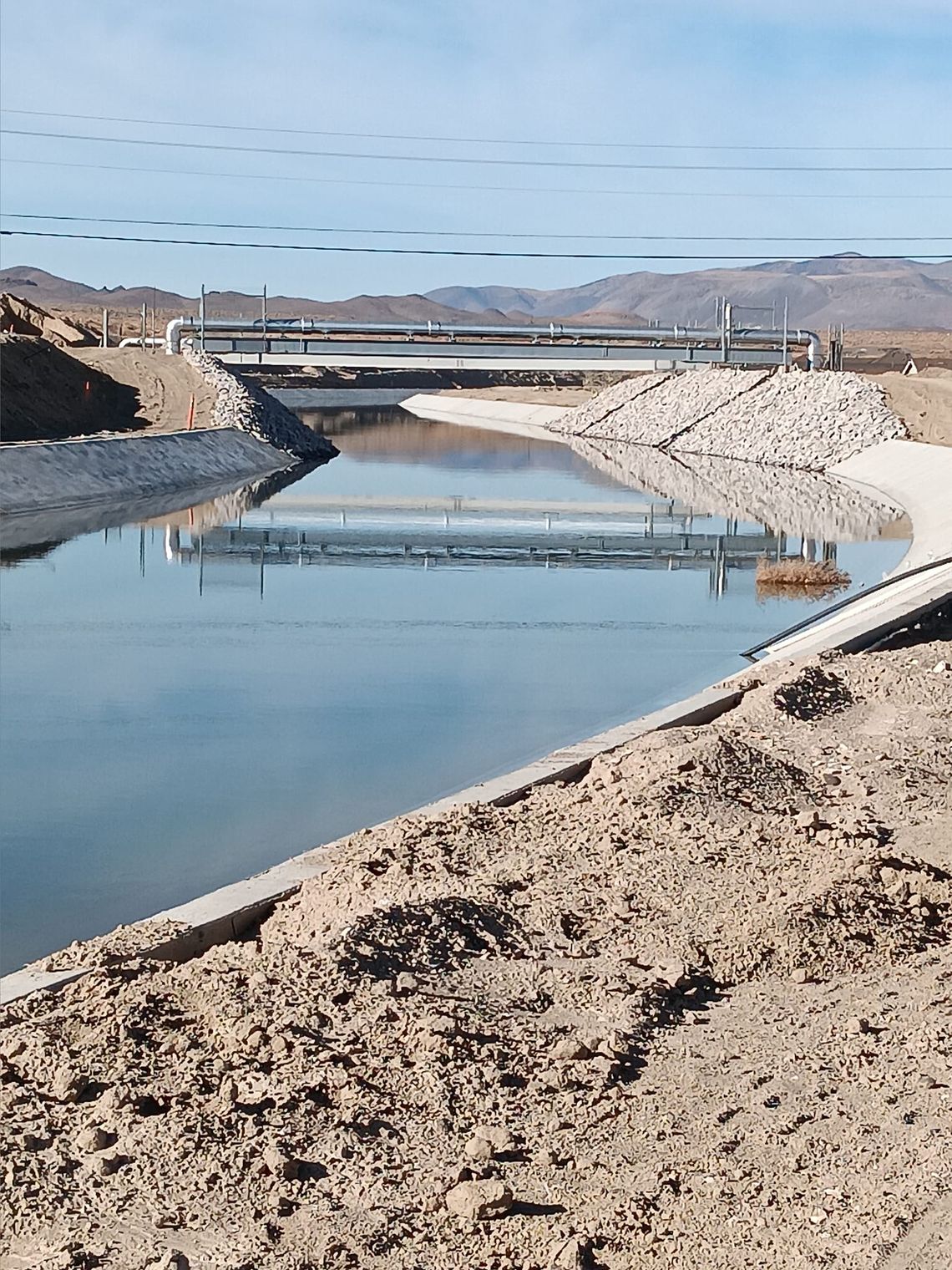
After years of fighting the federal government over plans to line portions of the Truckee Canal, the Fernley City Council has voted to end its lawsuit against the U.S. Bureau of Reclamation.
The council voted 4-0 on Oct. 21 to discontinue the litigation following a September ruling by the Ninth Circuit Court of Appeals that upheld the federal agency's environmental review of the canal project.
The decision brings to a close a lengthy legal effort by the city to challenge the Bureau of Reclamation's evaluation of how canal lining could affect groundwater supplies and the surrounding environment.
David Rigdon, an attorney with Taggart & Taggart who has represented the city in water matters, told council members that the latest ruling leaves Fernley with few realistic legal options.
"We've been fighting a litigation battle with the U.S. Bureau of Reclamation for many years now over the environmental impact statement that they did with regards to the lining of the canal," Rigdon said.
The dispute centers on the Truckee Canal, which carries water from the Truckee River toward Lahontan Reservoir as part of the Newlands Project. Water that seeps through the canal's unlined sections also contributes to groundwater recharge in the Fernley area.
Following a 2008 canal breach that flooded hundreds of Fernley homes, the Bureau of Reclamation developed a project to improve canal safety, including lining sections of the canal to reduce seepage and strengthen the system.
Fernley challenged the federal environmental impact statement, arguing that the agency had not adequately evaluated the consequences of reducing seepage, including potential effects on groundwater, vegetation, water quality and land subsidence.
The federal district court ruled in favor of the Bureau of Reclamation in January 2025, and the city appealed.
On Sept. 14, a three-judge panel of the Ninth Circuit upheld that decision, finding the agency had sufficiently examined alternatives, environmental consequences and mitigation measures under the National Environmental Policy Act.
The appeals court acknowledged the city's concerns about groundwater but concluded that the agency's analysis satisfied federal environmental review requirements.
The ruling did not establish that canal lining would have no effect on groundwater. Rather, the court determined that the Bureau of Reclamation had met its legal obligations in evaluating the project.
Rigdon told council members that a U.S. Supreme Court decision issued while Fernley's appeal was pending had also made it more difficult to challenge federal environmental reviews.
"Unfortunately, during the middle of that appeal to the Ninth Circuit, the United States Supreme Court came down with some precedent that pretty much changed the way these types of cases are argued and tilted the scales pretty heavily in the government's favor," he said.
With the appeal denied, Rigdon outlined three remaining possibilities: asking the three-judge panel to reconsider, requesting a broader review by the Ninth Circuit or petitioning the U.S. Supreme Court to hear the case.
He advised against pursuing any of them.
"We believe we've really gotten as far as we can go," Rigdon told the council, recommending that the city end the litigation.
Councilman Albert Torres, who said he has been involved with the issue throughout his more than seven years on the council, agreed that continuing the case was unlikely to produce a different result.
"I think that we are really done," Torres said. "And I hate to say that because I hate to give up."
Rigdon said he had worked on the city's canal-related legal matters for approximately 14 years, dating back to the period before the environmental impact statement was developed.
"It's been a long, long road here, and like you, I really hate to give it up, but we really are kind of at the end of the road," he said.
Councilman Ryan Hanan also expressed frustration with the outcome. He recalled attending mediation sessions and meetings with the Truckee-Carson Irrigation District as the city sought to address its concerns.
"I agree that we've exhausted all avenues that are appropriate," Hanan said.
He also emphasized the importance of reviewing any future projects affecting the canal.
"I hope that any future projects that are on that canal, that happen in that corridor, go through the necessary environmental reviews," Hanan said, adding that the city should have opportunities to present evidence and raise questions about additional work.
Torres made the motion to stop the litigation, Hanan seconded it, and the council approved the motion unanimously.
The decision ends the city's pursuit of further appeals in this case, but it does not eliminate the underlying questions about the long-term effects of reduced canal seepage on Fernley's groundwater.
Those concerns remain part of the city's broader water-management challenges as Fernley continues to grow.





Comment
Comments