

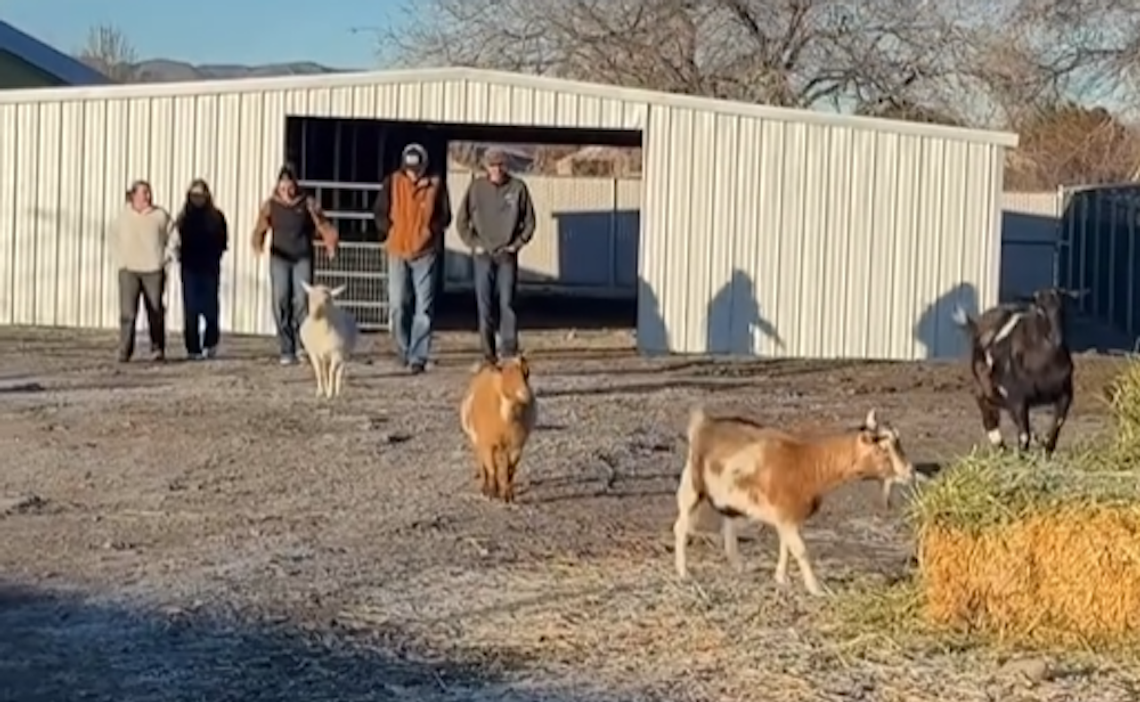
Behind East Valley Elementary School, some of Fernley High School’s most unusual teachers are waiting in a pasture.
There are five cows, six calves and a bull, along with four goats whose job includes keeping weeds and other vegetation under control. Nearby, an eight-stall barn gives high school students a place to turn classroom lessons into hands-on experience.
It is all part of Fernley High School’s Agriculture Career and Technical Education program, where teacher Sydney Botts is helping students understand just how much agriculture touches their lives — whether they eventually choose a career in the industry or not.
“If you live in a house, you wear clothes, you eat food, you consume agriculture,” Botts tells students on their first day of agriculture class.
For many students, she said, that comes as a surprise.
Botts said even students who have no intention of pursuing an agricultural career leave the program with a better understanding of where everyday products come from and the role agriculture plays in their lives.
For others, the program can become the beginning of a career.
Students have gone on to pursue welding, construction and other agriculture-related fields. Botts said she enjoys watching students discover something that interests them and begin turning that interest into a plan for life after high school.
The program’s barn and pasture are an important part of that process.
The barn was built specifically for the Fernley agriculture program with eight stalls, each capable of accommodating several animals. A separate steer pen can hold two steers.
The cattle herd currently includes five cows and six calves born in July and August. Students are also getting an education in the full livestock cycle as the cows are bred for next year’s calves.
Four goats housed at the barn serve a practical purpose as well, helping keep vegetation eaten down around the property.
For the students, however, the animals teach lessons that go well beyond feeding and livestock care.
Fernley FFA President Arianna Walker, a member of the livestock team, said having cattle available gives students an opportunity to learn by doing.
“Just having these cows here is a great way to have hands-on learning on how to take care of stock,” Walker said.
The program has also helped her develop confidence away from the pasture.
Walker said she was once afraid to speak in front of people and uncomfortable getting up in front of a class or starting conversations.
“This has really helped me open up my speaking skills and level of comfort with speaking in front of people,” she said.
Ainsley Blackorby said working with animals has taught her responsibility, patience and understanding — skills she can also use when working with other people.
She said the agriculture program exposes students to the business side of the industry as well.
For Dylan Viehland, the program is preparation for the future. Viehland said he joined because he hopes to pursue a career in agriculture and wanted to learn the fundamentals.
The hands-on work has also taught him skills that aren't necessarily found in a textbook.
“Being able to work hands-on gives you not only skills, but it gives you mental skills,” Viehland said. “It makes you patient with yourself and with others and animals.”
He said he hopes to continue in agriculture after high school.
The agriculture program is one of several CTE opportunities available at Fernley High School. Students can also pursue programs including welding and woodshop, giving them opportunities to learn practical skills while exploring possible careers.
For Botts, the agriculture program works whether a student eventually raises cattle, becomes a welder, enters construction or chooses a career that has nothing directly to do with agriculture.
They still leave knowing something about the system that feeds, clothes and supports them.
And the students' advice to classmates considering CTE is simple.
“Absolutely,” one student said. “We have so many amazing programs. Even if it's not ag, we have welding, we have woodshop, we have all of these great opportunities.”
Then came perhaps the best advice of all:
“Don’t waste it being scared.”




Comment
Comments