

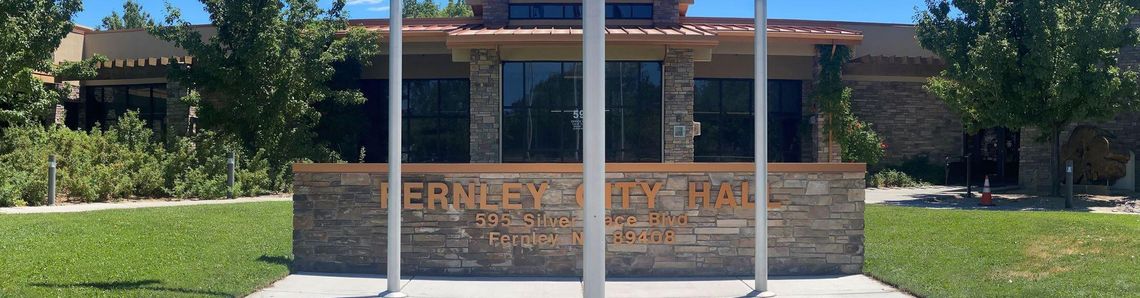
The Fernley City Council voted Sept. 16 to reject a $169,330 design contract for the proposed Mayor’s Pond Park, sending the project back for further discussion while leaving open the larger question of how the city should use the property.
The contract with Lumos & Associates had originally been placed on the consent agenda but was pulled for discussion by Councilman Albert Torres. The proposal called for designing the entire park, including a fishing pond, sports fields, playgrounds, walking paths, tennis and pickleball courts, horseshoe pits, an archery range, pavilion, restrooms and parking.
The city had previously set aside $100,000 for design work, which was carried forward into the current budget. It also received a $100,000 Nevada Department of Wildlife grant that could be used for design and construction of the pond itself. Staff said a full design would improve the city’s chances of obtaining future construction grants.
Council members, however, questioned whether the city should spend nearly $170,000 designing a park it does not yet have money to build.
Torres said engineers had indicated the full project could ultimately cost $4 million to $5 million and noted the city does not currently have firm donations or construction funding committed. He also questioned whether the proposed pond’s effect on the groundwater table had been sufficiently established.
“We don’t actually have facts on that,” Torres said, referring to the potential groundwater benefit. He said the city should concentrate first on improvements to existing parks and consider what could be designed with the $100,000 already budgeted.
Councilwoman Felicity Zoberski also raised concerns about existing park conditions and questioned whether money should first be directed toward facilities already in use.
Residents speaking during public comment had made similar arguments, pointing specifically to conditions at Green Valley Dog Park and questioning whether the city should add another major park before maintaining existing ones.
The discussion also suggested, however, that the pond has always had a second purpose beyond recreation.
Councilman Ryan Hanan said the two parcels involved were originally intended in part for rapid infiltration — allowing water to soak into the ground and help replenish groundwater supplies.
Hanan said groundwater recharge should remain the primary purpose of the property, with recreation secondary.
“I just want to for the record state that rapid infiltration and mitigation of the groundwater and well-water concerns is a top priority,” Hanan said.
He pointed to problems experienced with wells during the Truckee Canal shutdown and lining work and referenced recent unfavorable court rulings in Fernley’s long-running litigation involving the canal.
“It’s not about a fishing park,” Hanan said. “This is an issue that if we were to have five or six drought years, this is something that would take us five or six years to implement and it would be too late.”
Chief Development Officer Michele Rambo said the city has been discussing the pond concept with the Bureau of Reclamation and Truckee-Carson Irrigation District for about two years, including the possibility of using the pond for groundwater infiltration.
Chief Operating Officer Barry Williams said formal approval from agencies would come during the design process. Reviews could involve the Nevada Division of Environmental Protection’s Bureau of Water Pollution Control, the State Engineer, Bureau of Reclamation and TCID.
Councilman Joe Mendoza questioned whether the city should obtain written approval before paying for design work. Williams said the agencies typically would not issue approval until they had an actual design to review.
Mendoza also asked that any future design of sports fields preserve the ability to add the pond later if council ultimately decides to move forward.
Near the end of the discussion, Hanan asked that whatever proposal returns to council maintain rapid infiltration as the primary use of the two parcels and recreation as a secondary use.
Torres then moved to deny the Lumos contract and bring the $100,000 previously budgeted for the project back for further discussion. Zoberski seconded the motion, and the council approved it 3-1, with Hanan opposed.
The vote stops the current park design contract, but it does not resolve the future of the property — or the city’s broader groundwater recharge strategy.
The Fernley Reporter will take a closer look next week at the city’s long-running concerns over Truckee Canal seepage, recent court rulings and the role rapid infiltration could play in protecting Fernley’s aquifer.




Comment
Comments