

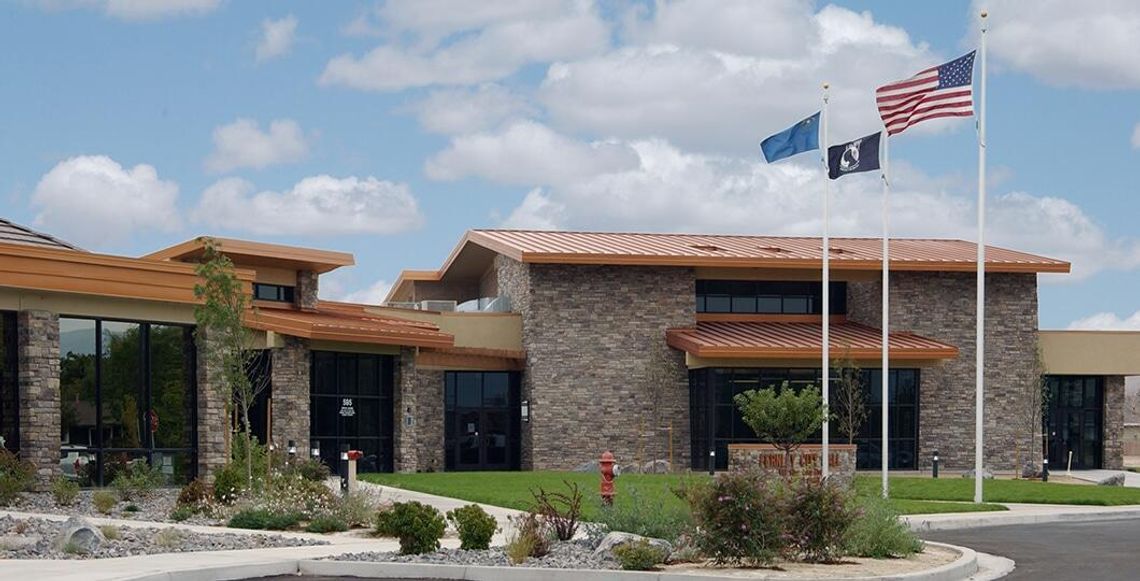
Fernley has adopted a new long-range sewer master plan aimed at keeping the city’s wastewater system ahead of aging infrastructure and future development.
The City Council voted 4-0 Aug. 19 to approve the plan, which updates a system last comprehensively reviewed in 2009 and lays out both immediate maintenance needs and larger projects that could be triggered by future growth.
The city’s existing sewer service area covers about 14 square miles and includes approximately 93 miles of city-owned sewer main, 11 lift stations and the East Wastewater Treatment Plant, which receives all wastewater generated within the system.
Owen Wurster of Shaw Engineering told the council the treatment plant currently receives about 1.42 million gallons per day. Its current capacity is 3.05 million gallons per day, with state planning requirements calling for design of an expansion once flows reach approximately 85 percent of capacity, or 2.59 million gallons per day.
Rather than relying solely on population growth estimates, engineers also reviewed tentative maps, active development applications and other known development interests throughout the city to project future demand.
The plan identifies approximately $7.6 million in maintenance and repair projects needed to keep the existing system operating reliably.
Those include rehabilitation of the Rolling Meadows lift station, inspection of the city’s gravity sewer system, upgrades to the computerized SCADA control system and modernization of several aging lift stations.
One concern is that the city’s sewer mains and manholes have not undergone a broad systemwide inspection since 2008.
Wurster said aging manholes can fail and create deep sinkholes beneath streets, making inspection important before failures occur.
The East Lift Station is another critical piece of infrastructure. It carries roughly 70 to 75 percent of Fernley’s wastewater directly to the treatment plant and is aging and in need of repairs.
The plan also identifies about $44 million in larger capacity-related projects, but city officials emphasized those costs are largely tied to future development and would not all fall on existing ratepayers.
“If growth stopped today, those projects wouldn’t be required,” Wurster told the council.
Potential projects include improvements to the West Lift Station, expansion of the South Arm interceptor serving areas south of the Truckee Canal and eventual expansion of the wastewater treatment plant.
Engineers said those improvements would be evaluated as development occurs, with developers expected to fund improvements required to accommodate their projects.
The plan also highlights aging transite, or asbestos-cement, sewer pipe in portions of the system. Wurster said the material is generally stable when left undisturbed but can deteriorate and fail as conditions change.
Councilwoman Felicity Zoberski raised another longstanding problem: the E-One grinder pump systems serving homes in Sage Ranch and Country Ranch.
Replacing those systems with conventional gravity sewer would require construction of entirely new sewer mains through the neighborhoods and a regional lift station, making it a multimillion-dollar undertaking.
For now, city crews replace approximately three to five E-One pumps each year at a cost of about $5,000 each.
Councilman Joe Mendoza also questioned how the city will monitor growth between master plan updates instead of waiting another five years to discover the system is approaching capacity.
Utilities Director Oz Henke said the city is evaluating newer SCADA technology that could provide ongoing flow monitoring and historical data. Engineers also said every proposed development undergoes a hydraulic analysis before sewer infrastructure is installed.
The plan is intended to be updated approximately every five years in periods of rapid growth.
Zoberski said wastewater infrastructure is easy for residents to overlook until something goes wrong.
“I think wastewater is undervalued because people don’t really think hard about it until there’s an issue,” she said.
The council unanimously adopted the plan as the city’s long-range guide for wastewater improvements, capital planning and future growth.





Comment
Comments