
An independent review commissioned by the City of Fernley validated several of the fundamental assumptions behind the project, as it raised questions about the schedule, financial projections and long-term operation of the proposed Fernley Power District.
Raftelis and GridCo Partners delivered their review of the proposed municipal electric utility to the City Aug. 5. The report examined the project’s financial projections, proposed generation facilities, natural gas supply, electric infrastructure, operating structure and governance.
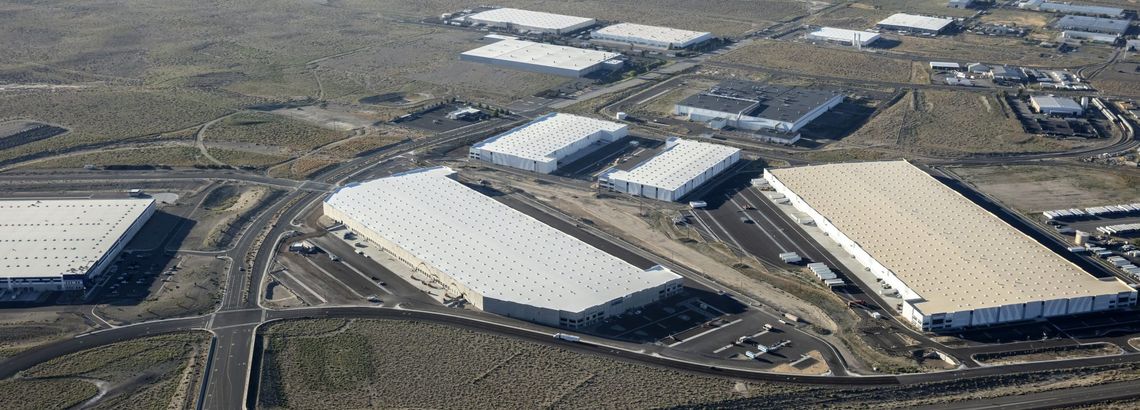
The Fernley Power District is being proposed as a way to provide electricity to large industrial users within the Victory development on Fernley’s east side. Mark IV Capital has said the development could eventually require as much as 1,800 megawatts of generation, while NV Energy has indicated it may not be able to provide that level of service until approximately 2038.
Under the proposed structure, the City would create the power district, but private developers and investors would finance the generation and electric infrastructure.
While the review identified significant items that must still be resolved, it also found several parts of the proposal credible.
Raftelis found the approximately $630 million investment identified for the initial 324-megawatt power plant to be a reasonable estimate for the assets described in the project’s conditional use permit application. The consultants estimated that eventual construction of 1,800 megawatts of generation and associated electric infrastructure would require more than $3 billion in total investment.
The report also independently checked the performance and fuel calculations provided for the project’s first-phase Solar Turbines generating units and reproduced the calculations within 1 percent.
Raftelis concluded that the turbine procurement and design methodology for the first phase was “credible and internally consistent.”
The review also found that the proposed 109-acre power plant site had enough room for the initial phase and said the site plans showed a properly engineered layout with efficient use of the available land.
Because the first phase would use simple-cycle natural gas turbines without a steam cycle, Raftelis said water use should be relatively small compared with a conventional combined-cycle power plant.
The report also reviewed a noise study prepared for the project. With planned equipment enclosures, predicted noise levels across Hwy 50, just over 3.2 miles away, would remain below the federal 55-decibel guideline. The study estimated the project would increase existing sound levels there by no more than one-tenth of a decibel.
Raftelis also found that the concept of operating the Fernley Power District as a self-contained electric system is not unprecedented. The report said isolated municipal systems, campus utilities and district energy systems operate elsewhere in the country.
The consultants further concluded that the industry of private companies capable of operating systems such as the proposed district is well established.
“The third-party electric system services industry is well established with multiple capable, experienced operators,” the report said, adding that contracting with a qualified company would be “the appropriate approach for FPD and should be an effective solution.”
The report did identify there are still questions about the ambitious project.
Among them were whether the project can meet its planned construction schedule, whether additional land will eventually be needed for the full 1,800-megawatt buildout, how future generation would comply with Nevada’s renewable portfolio requirements and how the district would provide the redundancy necessary to meet its proposed reliability standards.
Raftelis also questioned the revenue projections supporting the estimated franchise fee payments to Fernley.
The working group’s projections estimate franchise fee revenue beginning at approximately $1.7 million to $1.8 million in 2029 and growing to approximately $22 million to $23 million annually once the system reaches 1,800 megawatts.
Raftelis said it could not independently confirm the projected price of electricity used to generate those estimates and concluded that both the assumed energy prices and resulting franchise fee revenues may be overstated by 20 to 30 percent.
Even using that lower estimate, however, the proposed franchise fee would represent a significant new revenue source for the City.
The report also concluded that because Fernley would not be financing or operating the system itself, a franchise fee toward the lower end of the national range of 1 to 6 percent would be appropriate.
The proposed ordinance sets Fernley’s franchise fee at 1 percent of the district’s gross electric revenues.
Mark IV Capital responded to the Raftelis review the following day through an 11-page memorandum prepared by Powerline Law.
The response argues that several of the concerns identified by Raftelis assume the City itself would be financing or operating the electric system when the proposed ordinance expressly places those responsibilities elsewhere.
Under the proposed ordinance, private developers would bear the capital cost. The City’s general fund and taxpayers could not be required to advance money for the system, and the power district board would be prohibited from pledging the City’s credit.
The City would retain specific oversight powers, including setting the franchise fee, confirming a member of the district board, approving expansion of the service area and receiving annual financial and operating reports.
The governing documents also call for private participants in the district to indemnify the City against liabilities arising from the project.
Mark IV also pushed back on Raftelis’ concern that a number of agreements and plans have not yet been completed, including customer agreements, operating contracts, decommissioning security and renewable energy compliance plans.
Its response argues that those contracts cannot be finalized until the power district legally exists because the district itself will ultimately be a party to those agreements.
The response also challenges Raftelis’ conclusion that power prices and franchise fee revenues may be overstated by 20 to 30 percent.
Mark IV argues that Raftelis compared the proposed district with different kinds of electric systems and did not disclose the detailed model and assumptions behind its $92.72-per-megawatt-hour cost estimate.
The response points to an apparent contradiction within the Raftelis report itself.
Raftelis independently verified the project’s initial turbine fuel calculations, including an estimated energy cost of approximately $130 to $138 per megawatt-hour. Mark IV argues that a total cost of service of $92.72 per megawatt-hour cannot be reconciled with a verified fuel cost that is already higher than that amount before transmission, distribution, administration, financing and other costs are added.
Mark IV also argues that Raftelis appears to have modeled a more fuel-efficient combined-cycle plant, while the district’s initial phases are designed around simple-cycle turbines and reciprocating engines that can be obtained and installed more quickly but cost more to operate.
“The Raftelis Report identifies the same costs the Pro Forma already carries,” the response states. “The Raftelis Report explains why power in the District costs what the Pro Forma says it costs, and then concludes that the same power should cost 20 to 30 percent less.”
Mark IV also disputed portions of the report’s franchise fee analysis.
Raftelis said the most common electric franchise fees nationally range between 2 and 5 percent and noted that seven Nevada jurisdictions it reviewed charged the 5 percent statutory maximum.
Mark IV said the more relevant comparison is Storey County, home to the Tahoe Reno Industrial Center and some of Nevada’s largest industrial electric users. Storey County charges a 1 percent energy franchise fee.
According to Mark IV, that rate was a factor in negotiations with the large customers expected to locate in the Fernley district.
At full buildout, each percentage point of franchise fee would represent roughly $22 million annually on the projected volume of electric sales. Mark IV argues that imposing a significantly higher fee could make Fernley less competitive with Storey County and other locations competing for the same industrial investment.
The response also notes that state law, rather than a voluntary policy decision, required Reno and Elko to phase increases in their franchise fees over time.
Ultimately, Raftelis and Mark IV appear to agree on one central point: much of the detailed work of creating and operating the utility would take place after the district is established.
Where they differ is over how much of that work must be settled before the City Council creates it.
Raftelis urged the City to secure additional protections and clarity before moving forward. Mark IV argues that the proposed ordinance already protects Fernley by separating the City from the financial and operational risk while allowing the district board and private participants to negotiate the technical and commercial agreements necessary to build the system.
Neither the Mayor nor the city attorney responded to a request for comments.
Councilman Ryan Hanan, did respond and said he believes the potential opportunity for Fernley is difficult to overstate.
“This is an opportunity that comes around once in a generation for cities like Fernley,” Hanan said. “We have an opportunity to really embrace the future and to gather much-needed revenue.”
For years, Hanan said, Fernley has struggled living with the financial consequences of decisions made over the C-Tax issue, that raise the question of whether the city can afford to let another rare opportunity to build its own revenue base pass by.
“It’s kind of a C-tax equalizer for the City of Fernley,” he said. “For so long we were not able to close that gap with C-tax, and this gives us a position of power by which we create our own money through this franchise agreement.”


Comment
Comments