
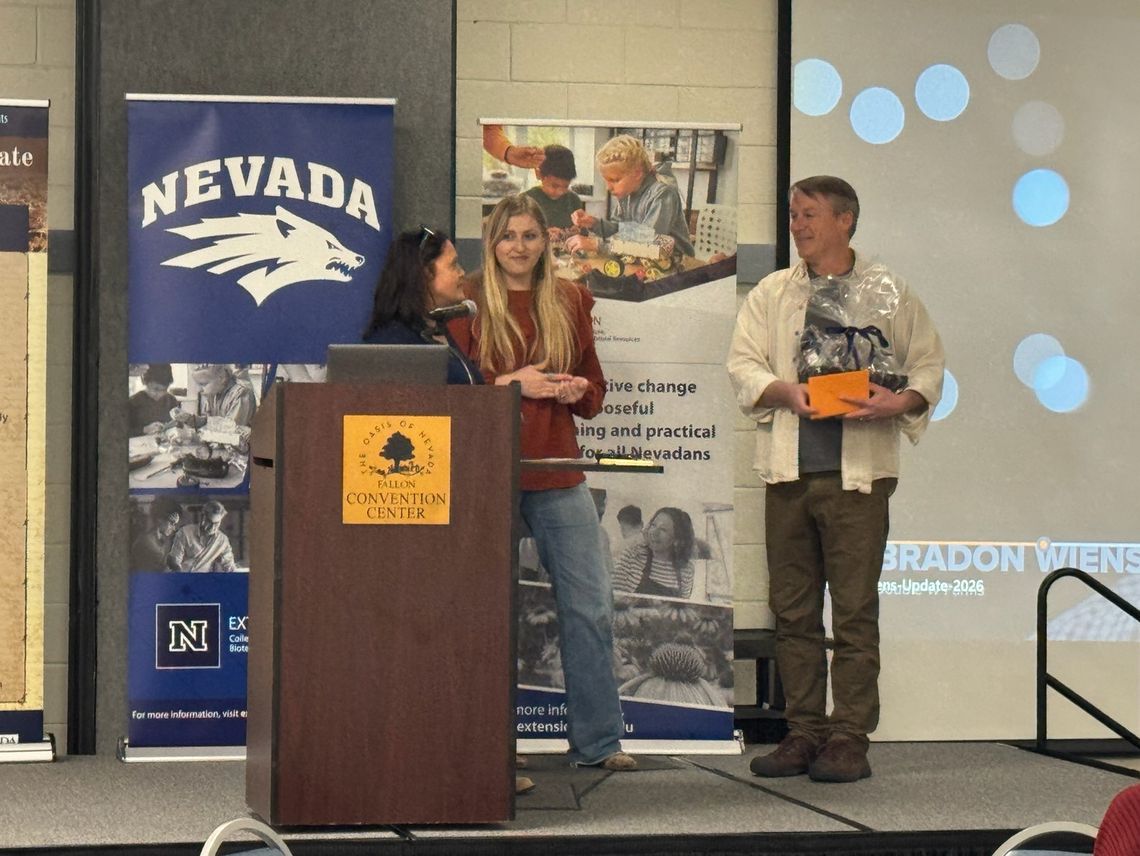
Nevada ranchers heading into 2026 are navigating a rare convergence of opportunity and uncertainty: historically tight cattle supplies and favorable price signals on one hand, and escalating wildfire risk, regulatory complexity, and animal health threats on the other.
Those themes anchor this year’s Cattlemen’s Update, a multi-day, statewide series bringing producers together with veterinarians, economists, fire professionals, and land-use experts to examine what lies ahead and how ranchers can position themselves to endure and adapt.
The most awaited information coming out of the Update is always the economic outlook. Shannon Neibergs, with the Western Extension Risk Management Center at Washington State University, presented a Nevada cattle market outlook shaped by tight national inventories, rebuilding pressure, and difficult heifer-retention decisions.
With fewer cows nationwide and drought-driven liquidation still rippling through the system, prices remain supportive, she said, but risk remains elevated. Neibergs emphasized that profitability hinges not just on market timing, but on disciplined financial analysis, especially when evaluating whether to retain heifers, invest in genetics, or expand cautiously rather than chase short-term price signals.
Sessions on genetics, reproduction, and herd improvement, led by Luis Schütz of the University of Nevada, Reno, reinforced that message. Tools such as Expected Progeny Differences (EPDs), DNA testing, synchronization, and artificial insemination can improve long-term efficiency, but only if costs, labor, and market realities are weighed carefully.
Beyond markets, wildfire remains one of the most immediate economic threats facing Nevada ranchers. The 2026 Fire Outlook & Rancher Liaison Program sessions brought ranchers, fire personnel, and agency representatives together to discuss preparedness, response, and recovery.
Speakers outlined anticipated wildfire risks for the coming year, along with the expanding role of the rancher liaison program, which helps integrate local livestock producers into fire response and post-fire decision-making. Ranchers learned how grazing can reduce fuel loads, how wildfire monitoring technologies are evolving, and how early communication with agencies can reduce conflict when fires ignite.
Organizers emphasized that ranchers are no longer seen solely as land users during fire events, but increasingly as partners in landscape resilience.
Animal health updates underscored how quickly biological threats can become economic crises. Peter Rolfe, Nevada’s state veterinarian with the Nevada Department of Agriculture, delivered a regulatory update that included discussion of the New World screwworm, an emerging concern for producers across the West.
Veterinary perspectives from Randy Wallstrum (Gardnerville), Sarah Hummel (Winnemucca), and Lyle Whitaker (Fallon) addressed current animal health challenges and emphasized the economic cost of delayed detection, biosecurity lapses, and misinformation.
Those concerns were reinforced in a biosecurity session led by Tracy Shane, who outlined practical planning tools producers can use to protect herds from disease incursions that can shut down operations overnight.
One of the Update’s most forward-looking messages came from keynote speaker Tipton D. Hudson, a professor of rangeland and livestock management with Washington State University Extension and creator of the Art of the Range podcast and Stocksmart App.
Hudson argued that while technology will continue to shape grazing management, people skills, not software, will drive the future of grazing enterprises. As grazing is increasingly recognized as an ecological tool, ranchers who can communicate effectively, build trust with agencies and communities, and demonstrate conservation outcomes will be better positioned to access land, influence policy, and remain viable.
Technology, Hudson emphasized, should support human judgment, not replace it.
The Update also made room for the future, with Youth for the Quality Care of Animals (YQCA) sessions offered at multiple locations. The national program provides hands-on, face-to-face training for youth ages 8–21, covering animal well-being, food safety, and character development at no cost to participants.
Organizers noted that sustaining Nevada’s livestock industry depends not only on markets and policy, but on preparing young producers to meet rising expectations from consumers and regulators alike.
Cattlemen’s Update sessions are offered both virtually and in person across the state, with stops in Fallon, Ely, Elko, Winnemucca, and online via Zoom. In-person events include meals and dedicated networking time, allowing producers to connect directly with agencies, specialists, and one another.
While the topics are technical, the message is straightforward: Nevada ranching remains economically viable, especially for those who plan ahead, manage risk deliberately, and stay engaged in a rapidly changing landscape.



Comment
Comments