Go to main contentsGo to main menu
Tuesday, November 17, 2026 at 5:10 AM

Utah’s bid for control of federal land gets support from Elko commissioners

Utah’s bid for control of federal land gets support from Elko commissioners
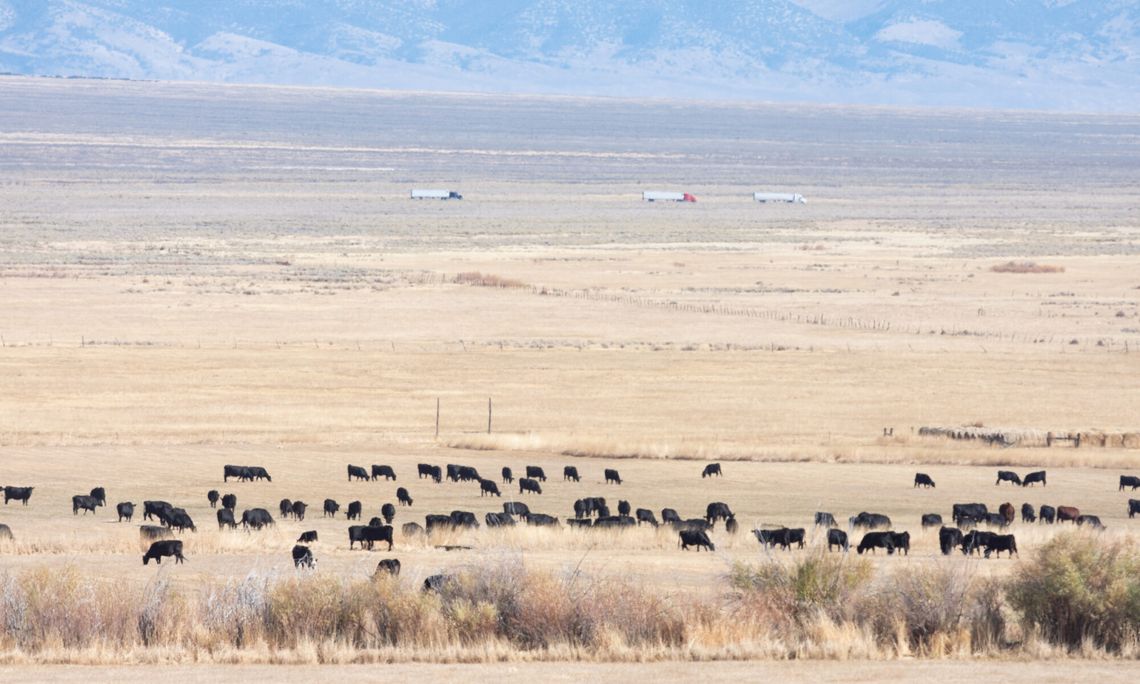
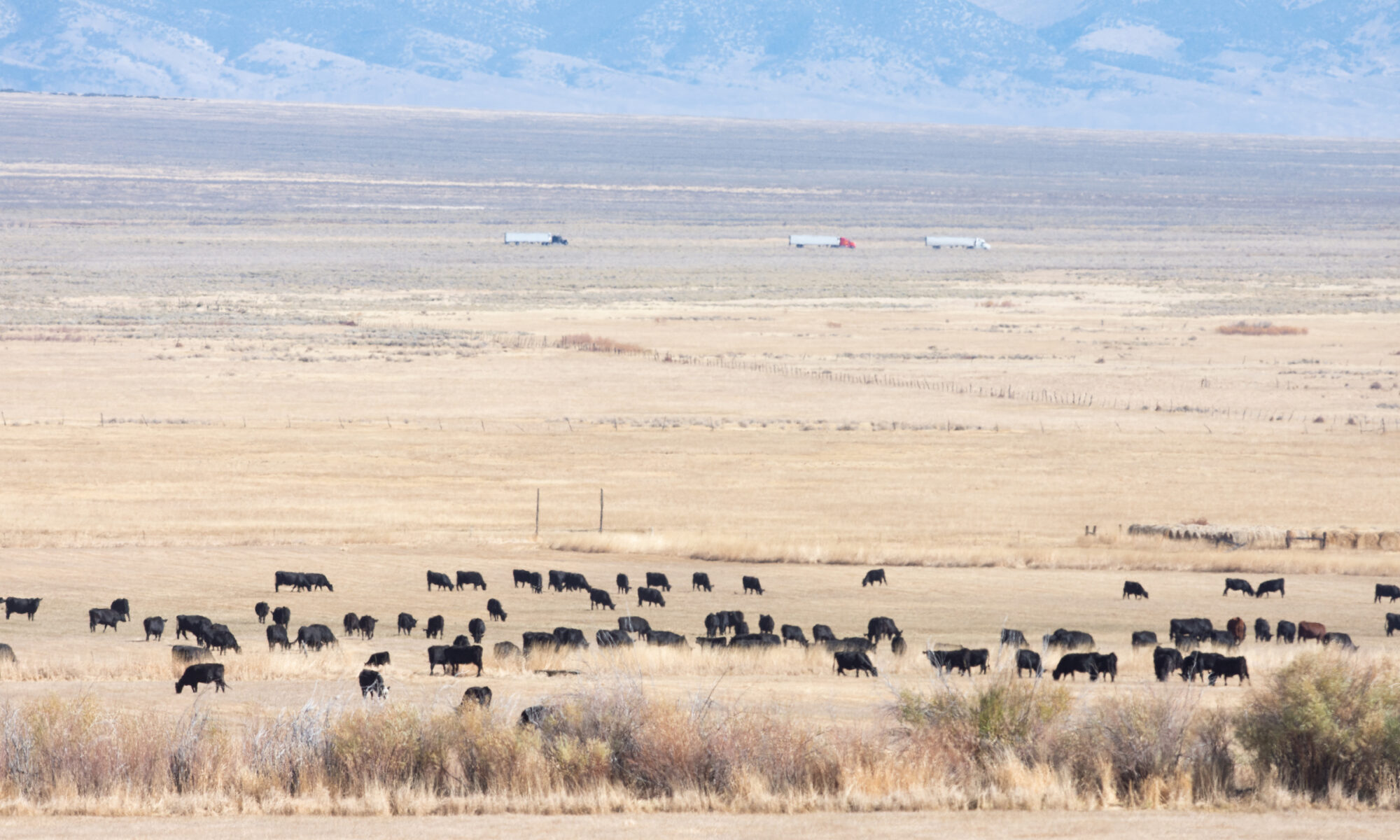
The case before the Supreme Court could have massive implications for Nevada, which is dominated by federal lands that are complicated to release. Cattle grazing off Interstate 80 near Elko on Oct. 16, 2018. (David Calvert/The Nevada Independent)

By Amy Alonzo

https://thenevadaindependent.com/

The Elko County Board of Commissioners on Wednesday unanimously approved a resolution supporting Utah in its quest to acquire more than 18 million acres of federally held public land.

In a federal lawsuit filed in August by Utah Gov. Spencer Cox and Attorney General Sean Reyes, Utah asked the U.S. Supreme Court to decide whether the federal government can indefinitely hold unappropriated lands — land that is not managed as a national park, forest, conservation area or otherwise protected — within states, an issue that spans multiple Western states.

The lawsuit seeks to convert control of roughly 18.5 million acres of unappropriated land back to state management.

Currently, only an act of Congress can transfer federal land to a state.

The Elko County Commission is the first Nevada governing body to formally weigh in on the lawsuit, with commissioners feeling optimistic about Utah’s chances under a conservative majority U.S. Supreme Court. 

If the court decides to hear the matter, it could have big implications for Nevada, where more than 85 percent of the state’s land is managed by the federal government. That federal land cannot be easily released into state control.

In Utah, nearly 70 percent of the state’s 54.3 million acres is managed by the federal government; Utah has the second-largest percentage of federally owned land in the nation. Only Nevada has more. 

Nevada has some access to its federal land — in 1998, Congress approved the Southern Nevada Public Land Management Act, which drew a boundary around the Las Vegas Valley, identifying public land to be sold at auction to private bidders. Profits from the sales remain in Nevada. 

But that access is limited, an issue that has been raised by Republican Gov. Joe Lombardo.

In 2023, he joined other Western Republican governors in opposing the Bureau of Land Management’s Public Lands Rule], which places conservation on equal footing with industry and resource extraction on federally managed land. 

And earlier this year, he sent a letter to President Joe Biden asking him to streamline the process of making federal land available for housing development.

Concerns regarding access to public land were reflected by the Elko County commissioners. 

“The Western states have not been treated the same as the Eastern states,” Elko County Commissioner Travis Gerber said. “Clearly the Constitution directed that Congress dispose of lands … and that’s the part the prior decisions have ignored — that word ‘disposed.’” 

State versus federal ownership

Present-day Nevada and Utah are part of a chunk of land acquired through the 1848 Treaty of Guadalupe Hidalgo, which ended the Mexican-American War and transferred a vast swath of land to the United States.

As the federal government divided the land into states in the mid to late 1800s, Congress delineated how much land the states could have for development of schools, prisons and other public facilities. 

But, as John Ruple, a law professor at the University of Utah S.J. Quinney College of Law told KUER, “There was no state land until the federal government created a state.

“So when we hear people talk about Utah taking back land, it doesn't make a whole lot of historical sense, because Utah didn't own that land prior to federal acquisition.”

In 2015, Nevada’s Senate passed a resolution asking Congress to convey more than 7 million acres of federal land to the state. That resolution drew the backing of Republican lawmakers such as then-Gov. Brian Sandoval and former U.S. Sen. Dean Heller.

Utah’s request is being backed by more than a dozen states, including Arizona, Alaska, Wyoming and Idaho. Multiple Eastern and central states with little national public land such as Alabama and Mississippi are also backing the state.

The lawsuit has also drawn opposition, with various groups speaking against it — hunters say it could be bad for sportsmen and wildlife, while conservationists worry it could lead to increased resource extraction, development and destruction of habitat.

The U.S. Supreme Court has not yet decided if it will hear the case.

Gerber, the Elko commissioner, said that with former President Donald Trump taking a second term in office and a conservative U.S. Supreme Court that recently voted to overturn the Chevron doctrine, a long-standing precedent that granted federal agencies power to interpret laws they administer, it is likely the court “will take a very serious look” at the lawsuit. 

The Elko resolution includes a $2,000 donation to support Utah’s effort. 


Share
Rate

Comment

Comments

COMMENTS
Comment author: John Mueller Comment text: FERNLEY’S WATER EMERGENCY: FIVE QUESTIONS STILL NEED ANSWERS The November 12 Fernley Reporter article provides a good recap of the November 3 water emergency and the November 4 City Council meeting. First, credit where credit is due. Our city employees responded, restored operations, and took precautions to protect residents. That’s important and appreciated. But fixing the immediate problem isn’t the same as preventing it from happening again. There are five reasonable questions our community deserves answers to: 1. WHAT ACTUALLY FAILED? What was the root cause of the water treatment plant’s communication failure, and why didn’t the backup systems prevent the interruption? 2. HOW CLOSE WERE WE TO A REAL EMERGENCY? How much usable water remained in storage, and how close did we come to affecting essential services, including firefighting? 3. WHAT WILL THIS COST TAXPAYERS AND RATEPAYERS? What did the emergency cost, what additional repairs or upgrades are necessary, and how will they be funded? 4. WHO IS RESPONSIBLE FOR MAKING SURE IT DOESN’T HAPPEN AGAIN? Is there a written corrective-action plan with assigned responsibilities, measurable results, and completion deadlines? 5. HOW WILL RESIDENTS KNOW THE PROBLEM IS REALLY FIXED? Will the city publish an after-action report explaining what happened, what was learned, what has been corrected, and what still needs attention? This isn’t about pointing fingers or finding someone to blame. It’s about learning, improving, and protecting our community. We can appreciate the city’s response while still expecting transparency, accountability, and a commitment to continuous improvement. Some technical information may need to remain confidential for security reasons. But that shouldn’t prevent residents from understanding the risks, the corrective actions, and the results. The real question isn’t whether Fernley recovered from the November 3 emergency. We know it did. The question is: If the same failure happened tomorrow, would we be better prepared? That’s a conversation worth having. Our community deserves more than reassurance. It deserves measurable results. Comment publication date: 11/12/26, 1:54 PM Comment source: Fernley Council Addresses Water Emergency Comment author: Donald DeVold Comment text: Great article It’s actually spelled DeVold Thank you Comment publication date: 10/29/26, 4:58 PM Comment source: The great robbery: Strip-6 by Solis helps Vaqueros punch playoff ticket Comment author: CH Comment text: I want to start a betting 'pool' for the October, November, and December closures: 1. A dent in the pool slide. 2. A failed breaker. 3. A pebble loose in the water part (replacing all concrete) 4. Hurricane Polo makes a sudden turn and blows off the roof (again). With soft muscles after 7 months of no swimming, the only health left is my sense of humor :) Comment publication date: 10/1/26, 11:18 AM Comment source: Fernley Pool Renovation Moves Forward, One Test at a Time Comment author: PFB Comment text: Why can't you guys find competent contractors.. For a large municipal facility like the indoor-outdoor Fernley Swimming Pool located at 300 Cottonwood Lane, a complete ground-up commercial build or major structural renovation typically spans 6 to 12 months or longer when factoring in large-scale engineering, public municipal permitting, specialized commercial HVAC/roofing, and health department inspections. The current renovation has been- The Fernley Swimming Pool has been closed for approximately six to seven months since late February 2026 for a major roof replacement and facility renovation. Now you sat October. Soooo 8 months for a new roof. The picture shows no other renovations. Comment publication date: 9/17/26, 7:14 PM Comment source: Electrical problem delays Fernley pool opening Comment author: P Comment text: Relative of the Mayor is to over see this site. Anyone who knows Fernley KNOWS this is more of the who you are related to and know business in this town. VOTE THEM ALL OUT AND THE CALIFORNIA TRANSPLANTS. Comment publication date: 9/16/26, 10:31 PM Comment source: Lift Station Failure Released Untreated Sewage Comment author: Christopher Walsh Comment text: Could you look into the strong recurring smell around Fernley? It smells like sewage and it can be bad enough that people don’t want to be outside or open their windows. It would be helpful to get an investigative journalist help the Fernley residents get a clear answer from the City, NDEP, and any involved facilities. I was really disappointed that the smell was not disclosed by my realtor when I moved here. I enjoy Fernley and am seeing the improvements that are being made. With Appreciation Comment publication date: 9/12/26, 2:49 PM Comment source: Sewage spill near City of Fernley Municipal Well 9