
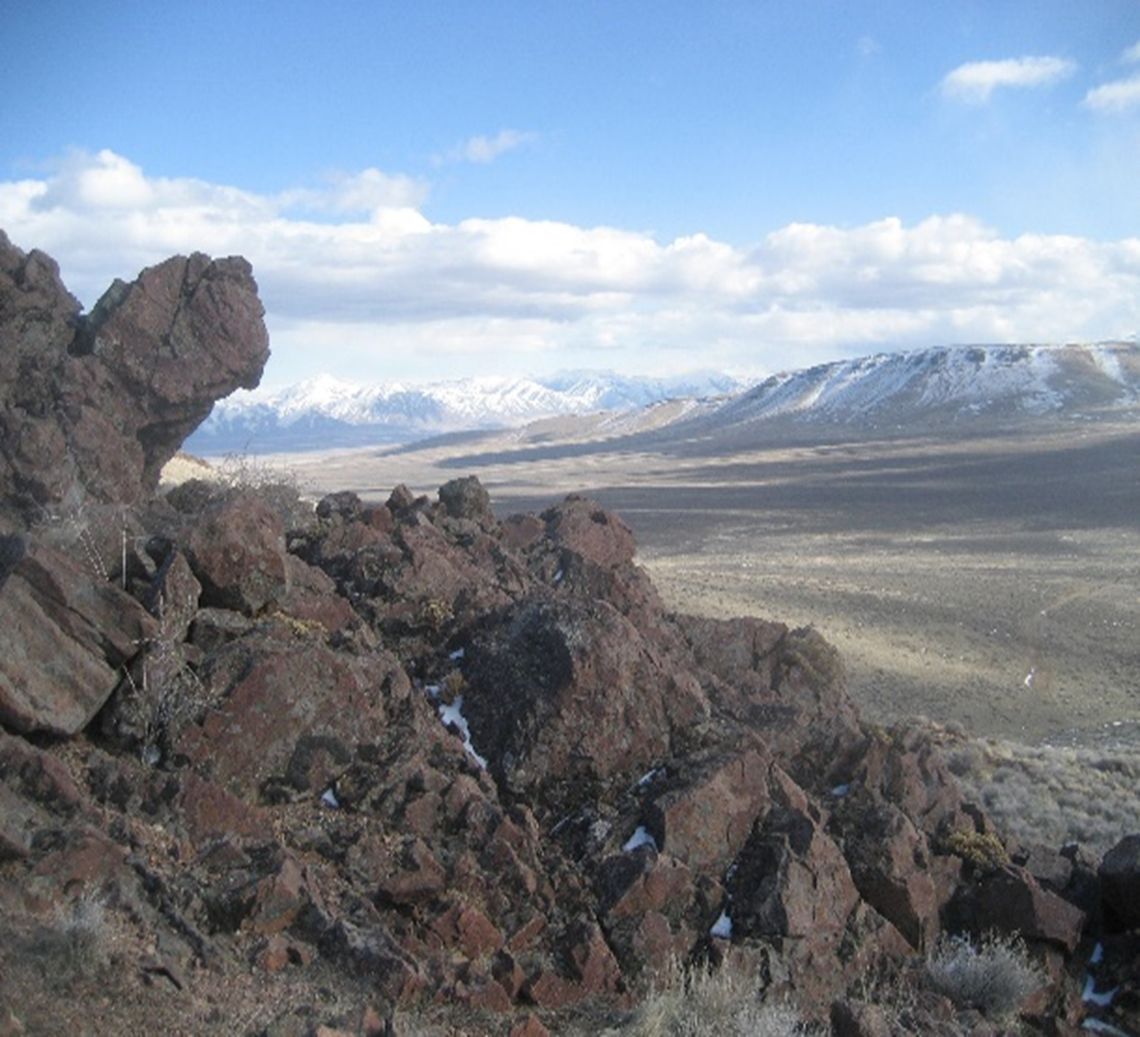
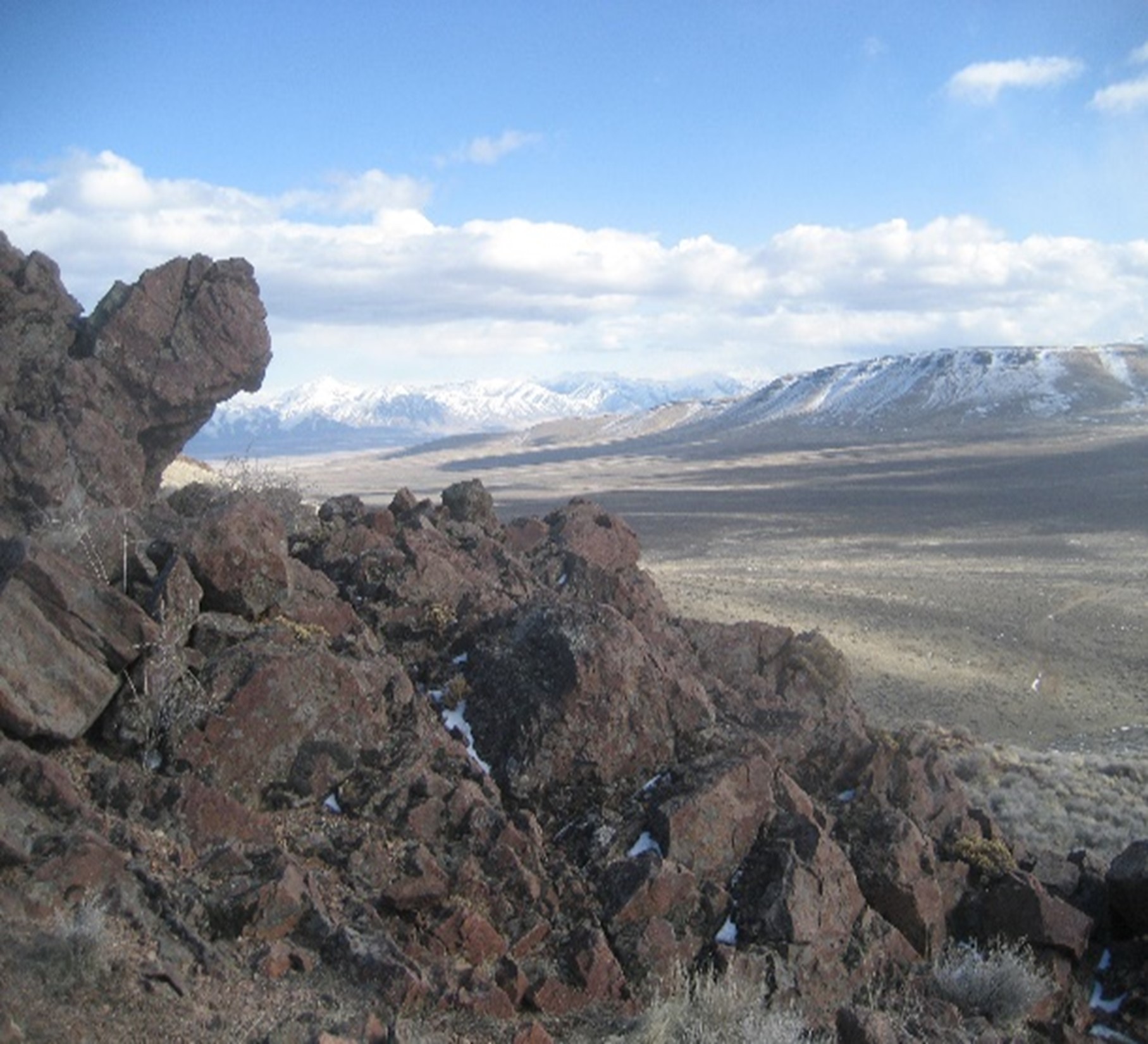
 The McDermitt Caldera in Humboldt County, Nevada, is among the world’s most highly mineralized calderas and contains significant deposits of lithium. A recent study by University of Nevada, Reno Extension projects financial and economic impacts of developing a lithium mine and processing plant in the area. Photo courtesy of Lithium Americas.
Robert Perea, The Fernley Reporter
A new study conducted by University of Nevada, Reno Extension projects a new lithium mine and processing plant in Humboldt County will generate more than $1 billion per year in investment and sales during construction of the project and more than $2 billion per year during its production years.
Large amounts of lithium deposits discovered in Thacker Pass in the McDermitt Caldera of Nevada’s Humboldt County have resulted in plans to construct a new lithium mine and processing plant there. The venture has been touted as being very lucrative not only for the corporation, Lithium Americas, but also for the state and county.
Lithium Americas commissioned Extension to conduct the analysis to provide useful information to the county and the state on how to plan for the challenges and opportunities the project will present. The study projects average annual economic and fiscal impacts for the short term, during the seven years of construction of the project, as well as for the long term, the next 35 years, which is the expected life of the project. The analysis takes into account the direct impacts of the project, as well as the indirect and induced impacts that will snowball from the project.
“Besides the direct effects – the expenses and labor needed to run the actual project – our analysis shows there will be a tremendous multiplier, or ripple effect,” said Buddy Borden, Extension community and economic development specialist and associate professor, who co-authored the study with Thomas Harris, retired Extension state specialist and professor. “In laymen’s terms, besides the expenses and labor needed to build and run the actual project, there will be more jobs created in other sectors needed to support the project and those employed by it, and more goods and services needed to meet increased demand due to increased income.”
Borden said that, besides calculating direct effects, the study calculated projections for “indirect” effects and “induced” effects set off by the project to assess the total impact. Indirect effects include things such as the additional purchases vendors need to make to restock inventory used by the project. Induced impacts reflect the increase in spending by households as incomes increase, as does the production of goods and services needed. For example, annual estimates include:
- Every $1 of capital construction investment will generate an additional 76 cents of spending in the state during the construction phases, and an additional 15 cents during the operations years.
- Every $1 of labor income because of construction investment will generate an additional $3.46 in labor income in the state during the construction phases, and an additional $1.04 during the operations years.
- Every direct job created by the project will generate an additional 6.0 jobs in the state during the construction phases and an additional 2.2 jobs during the operational years.
In real dollars, the projections equate to:
- For the state:
- During the construction years (first seven years), annual projected averages of over $1 billion in investment and sales, over $179 million in personal income, and 2,422 jobs
- During the operations years (35 years) annual projected averages of over $2.1 billion in investment and sales, over $148 million in personal income and 1,664 jobs
- For Humboldt County:
- During the construction years (first seven years), annual projected averages of over $727 million in investment and sales, over $81 million in personal income and 1,120 jobs
- During the operations years (35 years) annual projected averages of over $2.1 billion in investment and sales, over $122 million in personal income, and 1,320 jobs
“These projections we’ve been able to build through some complex economic models can help Humboldt County leaders predict impacts on government services and infrastructure,” Borden said. “That way, they can plan accordingly to make sure their community needs are met and that the entire community benefits and prospers from the project.”
Borden added that tax revenue projections were also calculated, and it’s estimated that the project will generate more than $26.5 million annually in local and county taxes, and over $40.7 million in state taxes.
“Our state has a number of rural communities whose economies depend on a diverse mining industry,” Borden said. “Adding lithium to the mix in Humboldt County certainly will contribute to the economic stability of the area, as well as the economic tax base of the state.”
Borden said the worldwide demand for lithium continues to outpace the supply, and is projected to do so for the next several decades. The demand will continue to be driven by advancements in clean-air technology used in battery-powered cars. The study sites predictions for an increase in demand will be driven by batteries needed for cars, electric bikes and scooters, as well as for renewable energy storage systems.
Lithium, under normal conditions, is the least dense solid element. And, like all alkali metals, it is highly reactive and flammable. Because of its lightness and high reactivity, it is excellent for batteries.
More information on the lithium industry can be found in the complete study published by Extension, which is available online. The 32-page report also includes other information, including detailed information on Humboldt County, the methodology used in calculating the projections, and more.
Photo Cutline: The McDermitt Caldera in Humboldt County, Nevada, is among the world’s most highly mineralized calderas and contains significant deposits of lithium. A recent study by University of Nevada, Reno Extension projects financial and economic impacts of developing a lithium mine and processing plant in the area. Photo courtesy of Lithium Americas.






Comment
Comments