
By Ray Hagar, Nevada Newsmakers
Plans for a second airport for Las Vegas -- in the Ivanpah Valley, about 35 miles south of the city -- are currently being considered at the Nevada Legislature with Senate Bill 19.
That bill -- recently discussed in the Assembly Government Affairs Committee -- would allow the Clark County Commission to set aside at least 5,000 acres off Interstate 15 between Jean and Primm as a new town for the proposed airport, according to the Las Vegas Review-Journal.
For a county where major construction projects are the norm, the new airport -- referred to as the Southern Nevada Supplemental Airport -- would be the biggest in decades, Clark County Commissioner Tick Segerblom said Tuesday on Nevada Newsmakers.
"First, you know, I support the bill," Segerblom told host Sam Shad. "I think it's important to preserve that land and make sure that we can control what happens there, pending an airport."
The discussion at the Legislature continues as Harry Reid International Airport is on pace to reach capacity of between 63 million and 65 million passengers annually as early as this year, according to the Las Vegas Review-Journal. Earlier projections estimated Reid International would not hit capacity until 2030.
While Segerblom supports SB19, he raised serious questions about the need for the airport, its potential for an increased tax burden on Clark County citizens and the availability of water to sustain the airport and the new town that will be created with it.
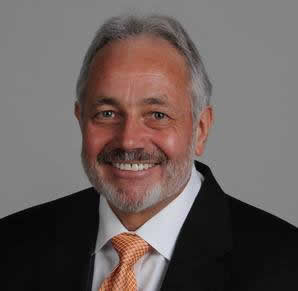
"We have limited water," he said. "We have limited air. We have overcrowded highways, we have overcrowded schools. Maybe we're putting the cart before the horse. And maybe we should slow down and analyze where we're going, who we are and make sure we have these resources before we start to build these huge infrastructure projects."
Water is Segerblom's major concern.
Although the water level at nearby Lake Mead has risen a few feet because of the recent long and wet winter, a federal report published last month warned of a dry future for the Southwest portion of the U.S. that depends on water from the Colorado River.
That report predicted that states, farms and Native American tribes could be forced to cut nearly 2.1 million more acre-feet of their Colorado River usage in 2024.
Nevada has the smallest allocation of Colorado River water of all seven of the river-basin states, at 300,000 acre-feet per year. Yet that allocation is critical for Las Vegas, since 90 percent of Las Vegas' water comes from the river, according to reports in the Washington Post. and other news outlets.
Segerblom is concerned that allocation may dwindle if Lake Mead's water-level crisis continues.
Although plans for a new airport go back more than two decades, the Las Vegas water situation is not what planners thought it would be just 10 years ago, Segerblom said.
"Our water situation is dramatically changed," he said. "And what we thought was going to be 300,000 acre feet (annually from the Colorado River) may only be 240,000 acre feet, which is makes a huge difference as far as what we can send down there (to Ivanpah Valley)."
He adds that infrastructure costs necessary to carry water down to the Ivanpah Valley airport and carry sewage back to a waste treatment plant will be staggering.
"I'm not saying we can't do it, but I think we need to analyze what we have, where we're going in the valley," Segerblom said.
"How much would it cost to take water down there?" he asked. "Every drop of water we take down there, we have to bring it back. So we have to build water pipelines down there. We have to bring water, sewage all the way back, which are going to be huge expenses.
"So there's lots of variables out there," Segerblom said. "And then, of course, are we going to have houses all the way from there to Ivanpah? So there are lots of things that we need to at least talk about as a community before we just say, 'Oh, it's good, it's a done deal.'"
If the new airport is built, it could handle all the cargo flights that come into Las Vegas along with international and long-haul flights, planners have said.
It would be much cheaper for companies to ship cargo to Las Vegas for western distribution than to California because of Nevada's lower taxes and other shipping-cost savings.
"Well, again, those are the things we can analyze," Segerblom said. "But if they fly the freight into Ivanpah, then they're going to put it on trucks and they're going to send it back to California, I assume.
"So, you know, right now our highways are vastly overcrowded. If you try to go back to California on Sunday afternoon, it's a 10-hour drive. Is that good for our economy, which is tourism?
"So we don't want to become a warehousing area with our limited resources, particularly with water," he said. "So, again, what are we trying to accomplish here? I don't think we want to just be a warehouse for California."
Segerblom questioned if there are ways to make Harry Reid International Airport more efficient, negating a need for another airport.
"Can we use larger airplanes? Do we have to be one of the cheapest air airports in the country? Maybe we ought to charge more fees to some of these really low-cost airlines ... There's lots of variables here," he said.
"We don't fly planes in all night, which might affect our quality of life," Segerblom continued. "But again, let's just analyze where we're going and make sure that we have the resources, particularly water, to build all the way out there."
Segerblom also does not want to burden Clark County taxpayers with the costs of a new airport when citizens have more pressing concerns.
"Let's just assume that (airport) is worth all these resources, those pipelines alone are going to cost billions of dollars. Who's going to pay for them?" he asked. "Is it my constituents who live in East Las Vegas who don't have a lot of money?
"But as far as the bill goes, I support the bill," he continued. "But then we need to think through how much this is going to cost. You know, we have school problems. We need more money for teachers. I need a children's hospital. I need a new courthouse. There's lots of things we could spend this money on."
He cited more pressing problems before the county commission.
"I'm trying to grow trees in East Las Vegas because it's a heat sink and people are dying or their quality of life is suffering because it's so hot," he said. "And with climate change, it's only getting get hotter.
"We want to improve the quality of life. We don't want to make it worse," he said.
Watch this episode of Nevada Newsmakers.
See the upcoming schedule for Nevada Newsmakers.



Comment
Comments