
By Ray Hagar, Nevada Newsmakers
State Sen. Scott Hammond, who championed the push for Education Savings Accounts in the 2015 Legislature, is leading a push for a new version of that bill in the current legislative session, he said on Nevada Newsmakers this week.
"The future of ESAs is coming," Hammond told host Sam Shad. "I am positive that almost everybody knows it and that includes everybody who's in opposition to it right now."
The 2015 version of ESA, a plan to allow parents to use "per-pupil" state tax money to pay for private school expenses, was approved by lawmakers in 2015.
However, its funding mechanism was later struck down by the Nevada Supreme Court. Hammond and other Republicans tried to revive the plan in 2017 and 2019 but it went nowhere in the face of Democratic majorities.
This session, Hammond's SB 200 would allocate $58 million toward ESAs. It comes in an legislative environment where Democrats still dominate, although Republican Gov. Joe Lombardo has called ESAs and opportunity scholarships “small bites” of the larger apple of school choice.
"They (lawmakers) see it because now, almost every state is sort of dabbling with it, trying to figure out how much of the ESA program they'd like to bring on," Hammond, R-Las Vegas, said. "Some of them want to start smaller, some of them want to just do it for those with learning disabilities, and then move on and include more and more as they get comfortable with it."
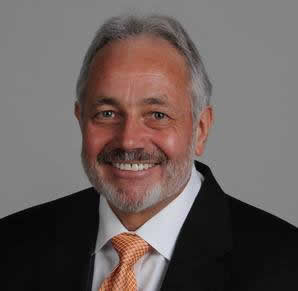
Many Democrats are opposed to ESAs because they would take money from public schools. The fact that Democrats still hold majorities in both houses of the Legislature does not deter Hammond's ESA push.
"It's going to be here because education in general has to change," he said. "It just cannot stay where it was. The sort of factory-style model that we had for many, many years -- you know, you put a teacher, four walls, a certain number of students in it and have bells telling you when to switch (classes). That's antiquated. We can't do that."
Hammond's ESA bill has been declared exempt and was not subject to last Friday's deadline for first committee passage. It was referred to the Senate Finance Committee last month, although no votes on the bill have taken place.
Hammond, a former teacher and member of the Senate Education Committee, said the ESA would help boost and nurture students who are "creative thinkers."
"They need to be able to learn outside the box and ESAs allow for that," he said. "That's that flexibility you need because it allows a platform for people to come in and innovate and deliver education in a different way. That's what the ESAs do."
The push for ESAs in Nevada won't end if the measure does not pass in the 2023 session.
"I don't know if we're going to get them again this session, but it's coming," he said.
"And I think everybody is resigned to that," he continued. "I mean, I talked to even the unions, the teachers unions, and I think that they also know it's coming. It's just the writing's on the wall. It's just I don't know when it's going to come for sure."
Covid's impact on education lingers
Hammond lamented how Covid disrupted education during the 2019-20 and 2020-21 school years, especially after then-Gov. Sisolak order all schools closed in March of 2020, which eventually resulted in a majority of schools using virtual or hybrid learning.
"I lament the fact that this actually occurred and that secondly, we did feel our students, too many of them, just weren't engaged during that time period," said Hammond.
"They weren't in front of a teacher," he added. "They weren't really engaged in front of that computer and we lost them."
He called the loss of learning "substantial," then added, "I think we're going to discover that it was even more substantial than we thought."
Social costs of the Covid education crisis may not be fully known for years, said Hammond.
"There are just a lot of things ... kids now are suffering some sort of anxiety that we probably won't even know exactly what it is for 10, 20 years," he said.
"When people are looking back and studying this time period of the students that went through COVID, they could find out that there was a human-interaction deficit," Hammond said. "In general, people's anxiety levels went up. It was not a very good time. I think that we kind of failed in our policies during that time."
Some teachers were not effective in virtual education settings, he said
"My wife happens to work for an online charter school, the Leadership Academy of Nevada," Hammond said. "And there is a big difference between those who really know how to deliver that education across the computer and those who really don't because they don't specialize in it.
"The teachers and the school districts, they pivoted as best they could and did the best they could," Hammond said. "There are some that didn't do very well. I will say that I felt like CCSD (Clark County School District) could have done a little bit better, (with) some of the policies that I heard coming from them. Students were getting online but were not required to be on camera.
"So you don't know if that student was ever really engaged because they would turn it (computer) on and leave or do whatever they might have been doing."
He praised the work of charter schools during the pandemic.
"The charters were very engaged, the students were in front of the cameras, teachers were talking to them," he said. "There was, you know, face to face, if you will, via technology. But they were still learning."
Watch this episode of Nevada Newsmakers.
See the upcoming schedule for Nevada Newsmakers.




Comment
Comments