
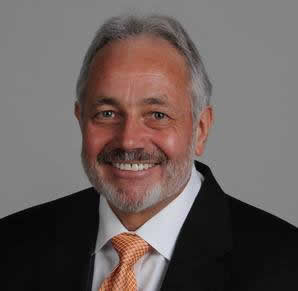
Nevada state Sen. Chris Brooks, D-Las Vegas, has a long-term plan for energy transmission for Nevada.
Right now, he describes Nevada as the "doughnut hole" of energy transmission in the west. Yet he envisions Nevada becoming the hub for wholesale energy transmission across the western United States. All the land west of the Rockies and then some. From Wyoming to Southern California, the Pacific Northwest to Texas, he said on Nevada Newsmakers.
It would bring jobs and wealth into our state. It could also rescue other states from disaster when they are hit with with unexpected freezes, like Texas. Or heat waves, like California.
"This is a huge, transformational opportunity for the state of Nevada," Brooks told host Sam Shad, "to be the center of the energy world for the whole western United States."
Nevada, however, would need a series of transmission lines across the state to get things started.
"By building that transmission, we would be the hub of the whole entire western interconnect, which is everything west of the Rockies," Brooks said on Nevada Newsmakers. "All of that energy would flow through Nevada, and some of it would come from Nevada.
"And all we need to do is build a few transmission lines,' he said, perhaps in an understatement.
Brooks and his Senate Democratic colleagues plan to present a energy plan sometime this legislative session. Part of that plan -- the proposal to spend $100 million on electrical charging stations for motor vehicles -- has received much of the attention.
Yet there's something more monumental in the plan. As noted by Riley Snyder of the Nevada Independent, the proposal is expected to include "language making it the official state policy of Nevada to increase transmission capacity in the state."
"It (transmission capacity) creates more resiliency in the state, so that we don't find ourselves in the situation that Texas was in, or we don't find ourselves in a situation that California found themselves 20 years ago, 10 years ago and even this summer," Brooks said. "And by accessing more markets, we can actually access cheaper electricity at times when we need it the most."
Brooks said he is working with Colorado state Sen. Chris Hansen, D-Denver, to coordinate interstate cooperation for a wholesale, multi-state energy market.
"What we are proposing in our bill, is what they are proposing in Colorado," Brooks said.
Brooks envisions a multi-state pact on energy transmission. He said a regional market would create utility-to-utility cooperation, "to make sure we are getting the absolute best value for the energy we are producing in our state and (giving us) access to the markets around us in a regulated and organized way so we can freely trade energy across the whole western United States.
"Right now, we are like 10 little different kingdoms when it comes to transmission and energy trading," Hansen said about western states. "We need to tie some of those together so we can have much lower costs. And much more availability for energy."
Nevada would generate revenue by transferring energy from market to market, Brooks said.
"When we move that energy, we get economy benefits as a state for doing it," he said. "And so, they pay a fee to be on the transmissions lines. We'll need storage to help us with those peak issues and we'll need transmission to access low cost, zero carbon energy markets so we can become the hub, right in the middle of the west."
Brooks sees Nevada going from night to day.
"If you looked at a map of transmission, you will see all of this transmission around us," he said. "And then there's Nevada, which is kind of the hole in the doughnut. If we just connected the dots to a few transmission lines, all of a sudden, all that energy that is flowing around us, would flow through us."
Last year, NV Energy announced plans to construct two major transmissions lines across the state, the Greenlink Nevada project. It goes right along with Brooks' thinking.
It is expected to take 11 years to complete and cost more than $2 billion. Both of the lines will stretch hundreds of miles, according to the Las Vegas Review-Journal, and make it less expensive to move energy between Northern and Southern Nevada.
"Just by building the Greenlink system, we open up the state to $10 billion of private investment into our state, through renewable energy generators who are going to put (energy) on to those transmission lines and then new loads that will take energy off of those transmission lines."
Ratepayers will help pay for the new transmission lines, yet they would not shoulder costs alone, Brooks said.
"All of those folks who are going to be bringing in that investment to Nevada -- tens of thousands of jobs, hundreds of million dollars in economic value to Nevada -- they will be paying to use those lines as well."
$100 million electric-charging plan
Last year, Gov. Steve Sisolak announced Nevada would seek a zero or near-zero greenhouse gas emissions standard by 2050. His "Clean Cars Nevada" initiative proposed last year would mandate that 6-8 percent of vehicles that automobile dealers offer for sale in Nevada be electric by 2025.
Building the infrastructure for electric charging stations, with a $100 million price tag, would help in those endeavors. The plan calls for the charging stations to be placed in "underserved communities" and the "resort corridor," Brooks said.
"Electric vehicles are coming, whether we want them or not," Brooks said.
"They are much lower in cost of ownership than a gasoline-engine vehicle is and we need to make that ownership possibility available to all Nevadans, not just those who own their own home and can afford to put a charging station in their garage."
The initial investment is large but Brooks sees profits in the plan.
"If we do that (build the charging infrastructure), we can leverage hundreds of millions of dollars in private investment in actual charging stations, across the state. But first we need to build that infrastructure. It's a chicken and the egg issue. If we build that, I think we will see massive investment in the state of Nevada."
Watch this episode of Nevada Newsmakers.
See the upcoming schedule of Nevada Newsmakers.



Comment
Comments