By Jazmin Orozco Rodriguez
https://thenevadaindependent.com
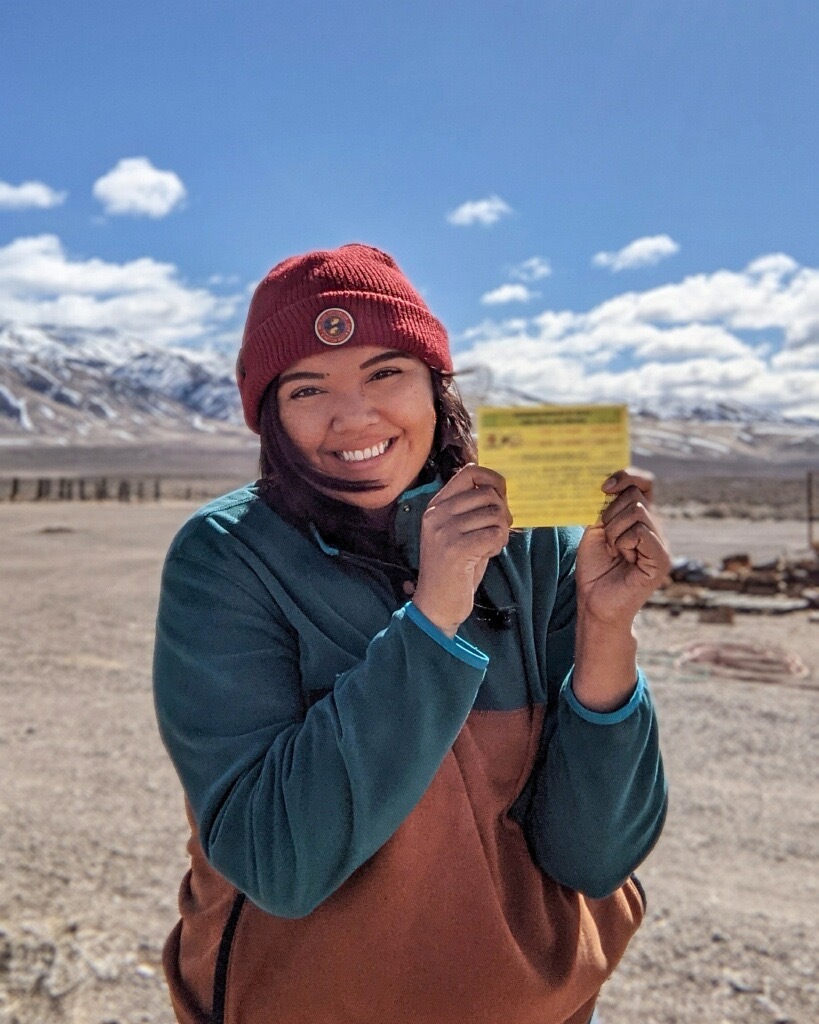
At dawn on a Saturday morning in late February, Autumn Harry eagerly secured her spot in line to receive the Moderna vaccine through the Pyramid Lake Paiute Tribe’s health clinic.
Seated in her vehicle at 6 a.m., she was three hours early to the 9 a.m. vaccine event for tribal members, with only three vehicles ahead of her.
“And when I left, there was probably closer to 50 cars that were lined up waiting to get their shot,” Harry, 28, said. “And many of those cars were whole families that were inside, you know, so it was really moving to see so many members from my community wanting to get their vaccine.”
The Pyramid Lake Paiute Tribe is one of many tribes around the state and country moving quickly through the vaccine rollout process, opening appointments and eligibility to the general tribal population 18 and over. There are more than 2,000 enrolled members of the tribe in Northern Nevada.
For tribal members, reaching the final stages of the vaccine rollout provides a greater sense of safety and hope among the disproportionately hit population.
“It has been really devastating for so many of our Native communities with COVID because we have had a lot of elders and knowledge-keepers who have passed from the virus,” Harry said. “There's still so many families that are grieving, and also just people who have recovered from the virus, they're still dealing with the long-lasting effects from COVID.”
There have been 223 cases of COVID-19 and five deaths among the tribe as of Thursday. Across the country, the Centers for Disease Control and Prevention (CDC) found that Native Americans are nearly twice as likely to die from the virus than non-Hispanic whites, with the disparity highest among those ages 20 to 49.
Harry said she felt happy upon receiving the vaccine, but more than that, she felt a sense of relief.
She and the other tribal members who received vaccines in late February are scheduled to receive the final dose in a few weeks. As of Thursday, the Pyramid Lake Paiute Tribe had administered 733 doses of the Moderna vaccine.
Other tribes that have moved to the final stage of the vaccine distribution process include the Walker River Paiute Tribe, the Moapa Band of Paiutes, the Reno-Sparks Indian Colony and the Elko Band.
Walker River Paiute Tribal Chairman Amber Torres said the small population size of the tribe helped the vaccine distribution speed along to its final stages within two months of receiving the initial allotment of Moderna doses from the Indian Health Service, a federal agency responsible for the public health needs of tribes across the country. There are more than 1,000 tribal members living on the reservation 100 miles southeast of Reno.
“I think it did work to our advantage because we did see that in the urban areas, they were still trying to work on first responders, health care personnel, teachers, those types of things where we were ready to move into the second tier at that point,” Torres said.
The Walker River Paiute Tribe has administered vaccines to more than 500 tribal members as of last week, with the goal of reaching more than 600 on the reservation.
South of Las Vegas, the Moapa Band of Paiutes expanded availability for the Moderna vaccine to tribal members over the age of 18 on March 1. More than 300 enrolled members live on the reservation. Tribal Secretary Ashly Osborne credits the success of the tribe’s quick distribution to the preparedness of the tribal council.
“We were always a step ahead. Things back at home, I would say are running efficiently. They felt safe, they felt secure, they had access,” said Osborne, referring to tribal members.
The Reno-Sparks Indian Colony will also expand the vaccine tier to the population 18 and over on Monday, announced tribal leaders during a live meeting on Facebook last week.
There are more than 1,000 enrolled members in the Reno colony and the Hungry Valley Reservation. But the tribal health clinic treats non-Native patients as well, so the vaccine distribution process has been a heavier lift for the clinic and tribe.
Tribal Administrator Angie Wilson said the tribe has been tight on vaccine allotments through the Indian Health Service, which she acknowledged as an issue the state and local counties have experienced as well.
Wilson said another issue the tribe and clinic are facing amid the vaccine rollout is that some tribal members who have received their first shot are not showing up to their appointments for the final dose, which is needed for the Moderna and Pfizer vaccines, but not the newer Janssen vaccine. The tribe won’t receive allotments of the latter until April.
“Getting the vaccines is critical,” said Wilson. “We're not only facing the challenge of these vaccines, but we're also being challenged in the administration and the logistics of getting these vaccines out to such a high Indian population here.”
In the farthest northeast corner of the state, Elko Band Chairman Davis Gonzales said the tribe moved smoothly through the vaccine process, now distributing vaccines to all members 18 and older. More than 1,200 tribal members live in the colony.
Gonzales said the tribe is focused on reaching tribal members who haven’t received their shots at this point. He said he scolds tribal members he comes in contact with who haven’t received the vaccine.
“Get the damn shot because COVID don’t care who you are, what you look like, it’s going to jump on you and make you sick!” said the chairman, who received his shot about a month ago.
Bethany Sam, spokesperson for the Reno-Sparks Indian Colony, echoed Gonzales’ urgency.
“Our ancestors went through this with smallpox and they didn't have the science that we have now and I just think about how our tribes had to leave people behind so they wouldn't infect the rest of the community,” Sam said. “And now we have a vaccine, we don't have to do that, so I'm just encouraging you all to really think about the vaccine and scheduling your appointments as we start opening it up by March 15.”
Looking ahead with hope
As sovereign nations, many Nevada tribes implemented tighter restrictions on reservations than state or local directives in the last year during the pandemic. Many ordered curfews, mask mandates and completely closed reservation borders to non-residents in an effort to protect vulnerable communities.
Torres of the Walker River Paiute Tribe credits the strict measures with the tribe’s success in maintaining low case numbers throughout the reservation.
“We put a lot of measures in place early on in March. I think that was also what helped us keep our numbers down, because we do have a majority of our membership who work off of the reservation. So they're going in and out every day, but we wanted to make sure that once they were home, everything was safe here,” she said.
As the state and local directives have yo-yoed through phases and “pauses,” tribes remained steadfast in their orders, with some only now, a year later, having conversations among tribal councils about loosening restrictions while maintaining mask mandates and social distancing.
“We're really trying to also promote that if you get vaccinated, we can get back into the new normal and start looking at soft openings of businesses, entities, possibly Weber Reservoir in the future because our people will possibly be safe at that point,” Torres said.
She added that she’s concerned about stalling a reopening in the springtime, as nonresidents seek to spend time among the reservation’s recreational areas, such as the reservoir. Last year when the tribe closed its borders, nonresidents trespassed and broke, shot and burned signs that warned the reservation was closed.
“If we do decide to keep our reservoir closed, I hope that people can respect that decision because again, we as a sovereign nation make decisions on the best behalf of our membership,” she said.
The Pyramid Lake Paiute Tribe reopened the reservation to recreational visitors in November. The Moapa Band of Paiutes lifted the curfew order and reopened the reservation for residents, but still requires non-residents to present a negative COVID-19 test or proof of vaccination to enter. The Elko Band Colony doesn’t have many restrictions in place for the reservation, except for a mask mandate and a restriction on events or large gatherings.
Reno-Sparks Indian Colony Chairman Arlan Melendez said the tribal council would weigh the decision in a meeting last week, adding that he wanted to be cautious of opening too soon.
“What we don’t want to do is open up too early,” he said during the live meeting on Facebook, adding that loosening restrictions prematurely could make all their “effort go down the drain.”
“So we're just gonna have to wait and see what happens there but we're being vigilant here at Reno-Sparks and we're taking our time and trying to do things right as far as opening up,” Melendez said.
Torres and Osborne from the Walker River Paiute Tribe and Moapa Band of Paiutes, respectively, said tribal members are eager to participate in important cultural gatherings and be in community again.
“I think that's been the biggest burden on our reservation is that people can't practice ceremony, and just the way we interact with people as our relatives, as Native people, it’s not what we're used to,” she said.
Both Torres and Osborne also said they didn’t know what to expect when their first vaccine allotments arrived from the Indian Health Service. Torres said she received “kickback” from tribal members initially regarding the vaccine, but that pushback has subsided and it’s become more normalized now.
Osborne said that when the pandemic began a year ago, the tribal council grappled with how to handle the unprecedented event.
“It was terrifying,” she said. “It was challenging at times, when we didn't feel that this was going to end. And I think that our biggest concern that I've always stressed to a lot of people that I spoke to about this is that not only do we have to worry about our immediate families, like losing a loved one, but the preservation of our culture.”
Osborne credits the work of the tribal council in protecting their community through the pandemic during the last year.
“All of us working simultaneously together really was able to preserve not only our culture, but take care of our people and keep it going — resilience,” she said.


Comment
Comments