Go to main contentsGo to main menu
Saturday, November 28, 2026 at 8:59 AM
Ad

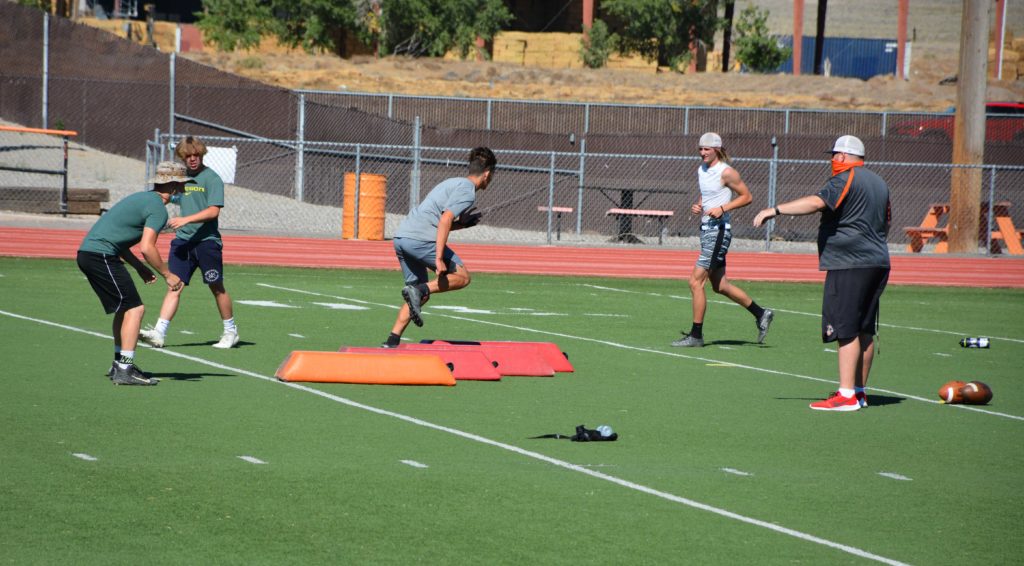
With season still in question, Vaqueros embark on socially distant workouts

With season still in question, Vaqueros embark on socially distant workouts
Photos by Cailynne Bixby

Robert Perea, The Fernley Reporter

With two weeks before the start of practice and five weeks until the first game, the question of whether there will be a high school football season this fall is still without an answer.

But while they wait for that decision, it’s business, but not quite as usual, for the defending 3A state champion Fernley Vaqueros.

The Vaqueros began offseason conditioning workouts June 22, following the announcement by Gov. Steve Sisolak that relaxed some of the restrictions on gatherings, and a directive by the Nevada Interscholastic Activities Association that allowed schools to open their facilities.

While the workouts might still be football-centric, they still must maintain compliance with social distancing guidelines and other restrictions. For this year, at least, that means the number one offseason staple, the weight room, has been off limits. Previous guidelines would have limited the Vaqueros to 10 people at a time in the weight room. But because at least one must be a coach, that would mean at most nine players at a time. Updated regulations this week allow 15, but with nearly 100 players in the program, the coaches decided to forgo the weight room.

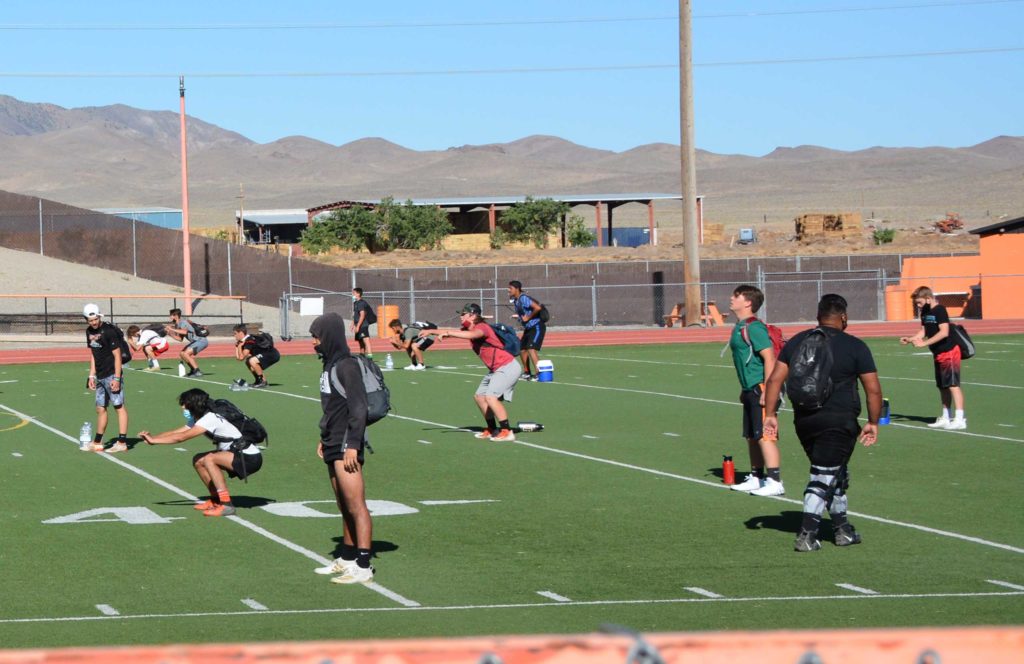
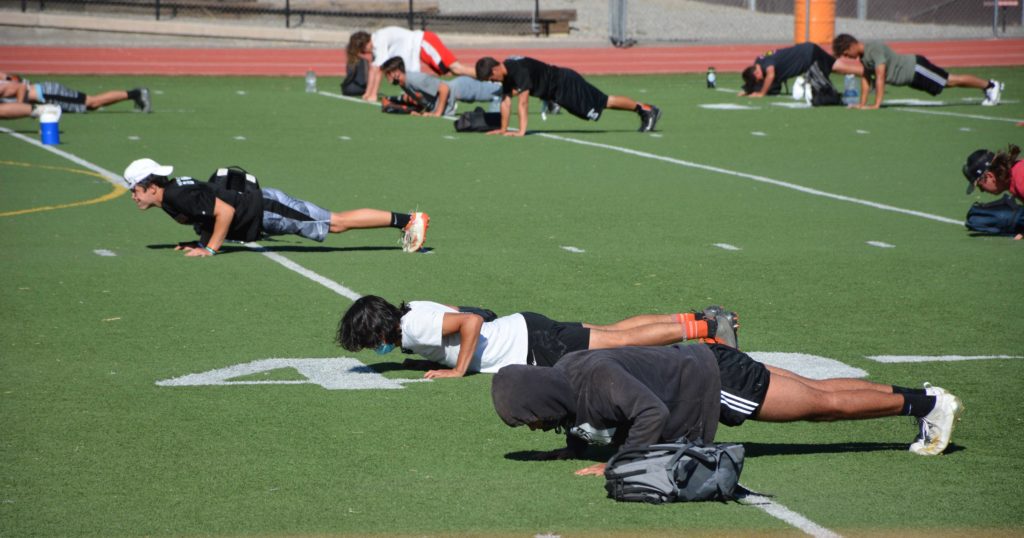
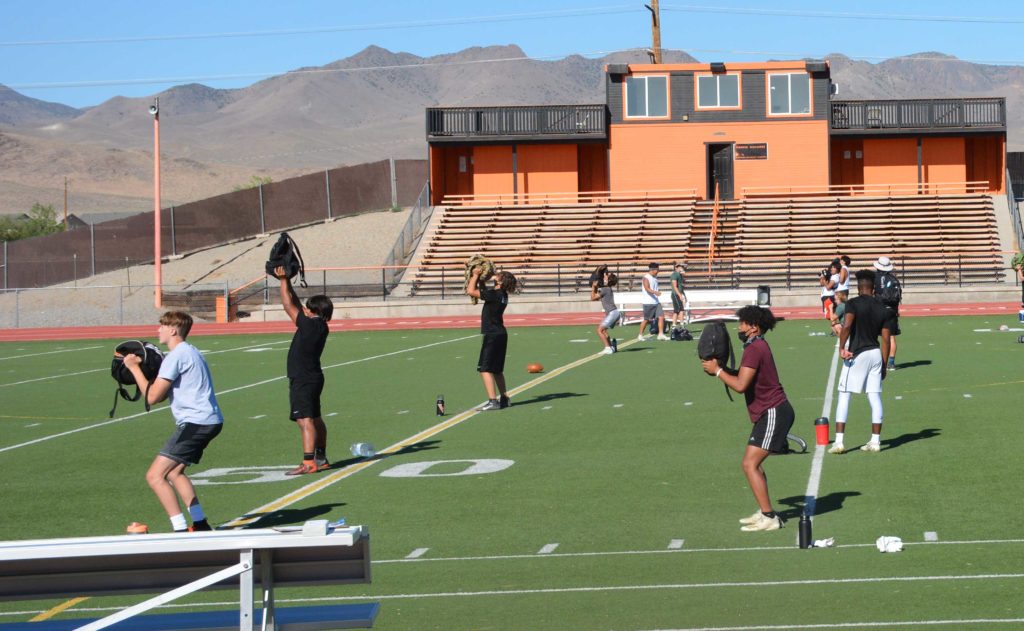
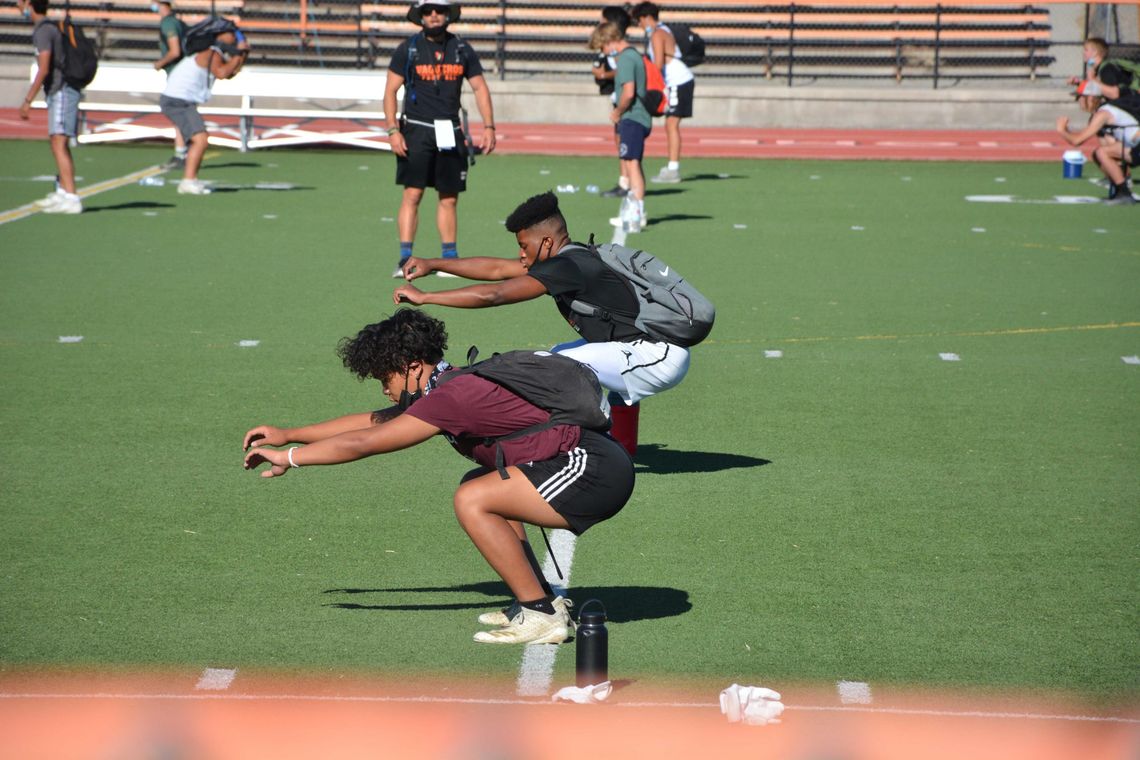
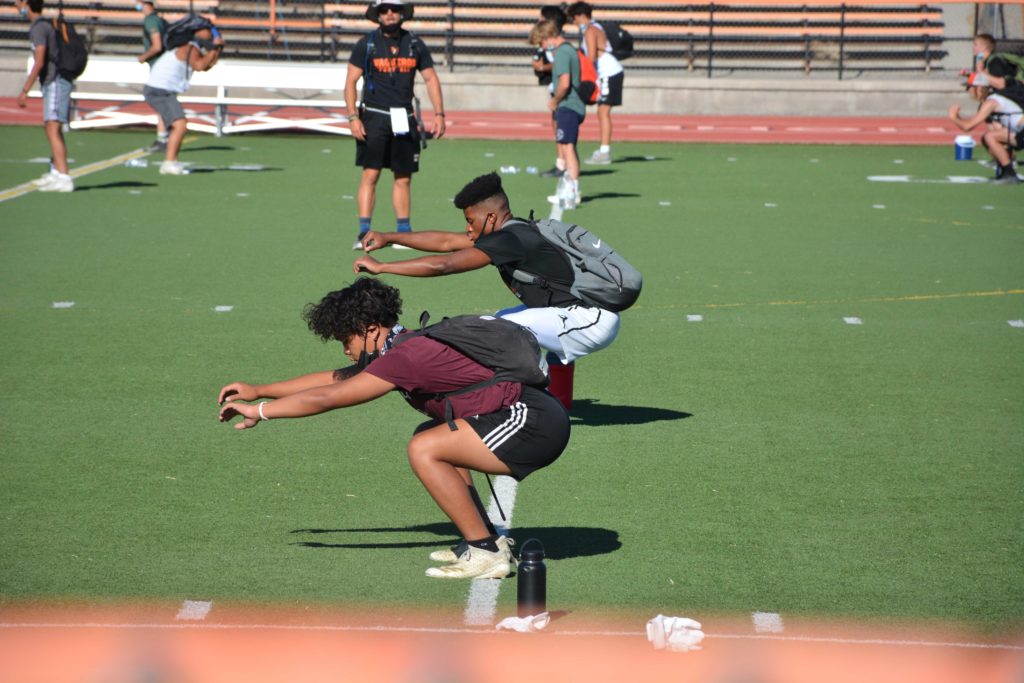
Instead, the players were instructed to fill a backpack or duffel bag with small garbage bags or grocery bags of small rocks or sand. The players then wear those to add resistance and weight as they do their exercises and drills.

“We just said it’s not worth going into the weight room,” head coach Chris Ward said.

The players use the sandbags for weight while doing squats and lunges, legwork, pushups and endurance training.

“Actually, it’s working pretty good,” Ward said.

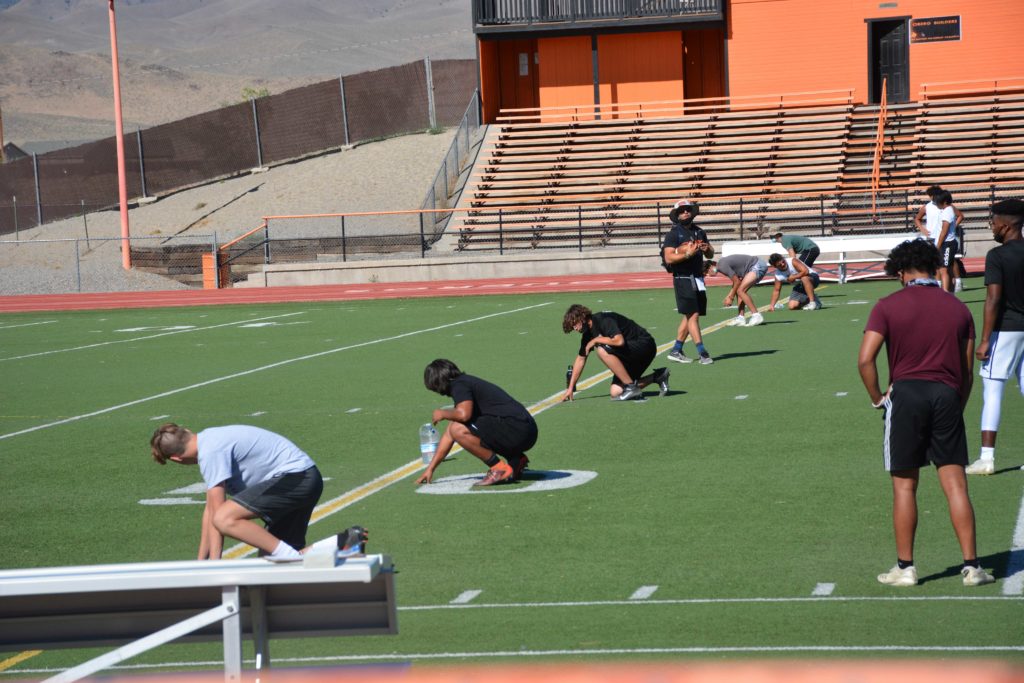
Before workouts can begin each morning, coaches check each player’s temperature and ask them a series of COVID-19 related questions. Each player is assigned a pole on the fence, and that’s where the player stands to be counted for attendance, have his temperature checked and answer the questions. The player then leaves his water, equipment bag and other belongings in that spot, and uses the same spot every day.

Players must bring masks to practice, and they must wear them during the screening process, but wearing them is optional during workouts.

If a player’s temperature is higher than 100.3, then that player would be sent home. Ward said, so far, there has only been one instance of a player’s temperature being 100 degrees. But that player rode his bike from home to school, and was hot and sweaty, and after sitting in the shade for five minutes, his temperature was normal.

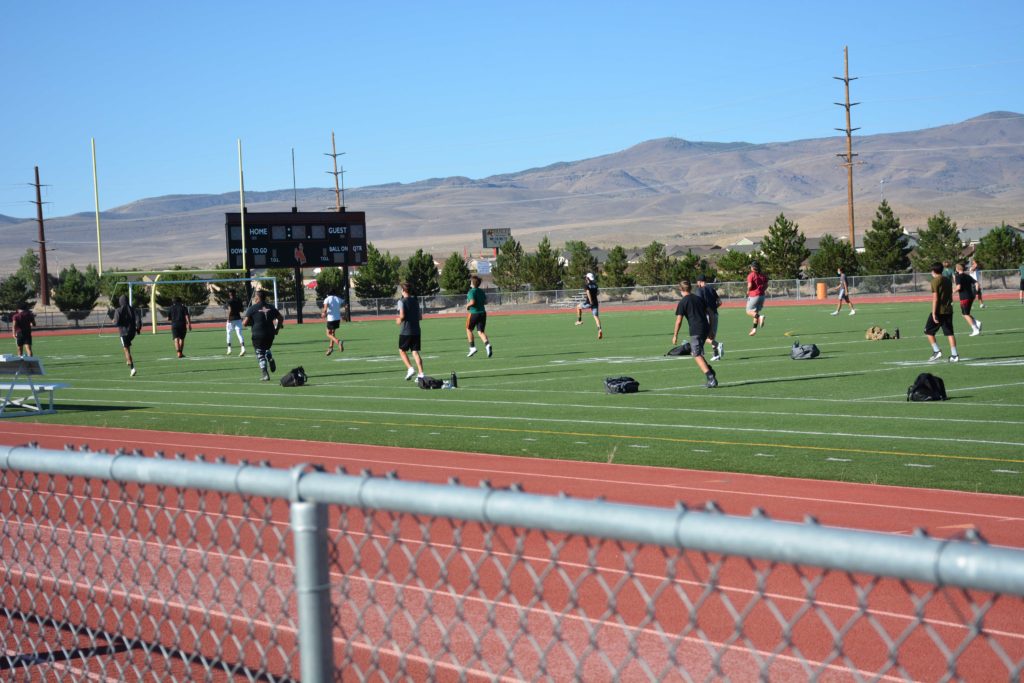
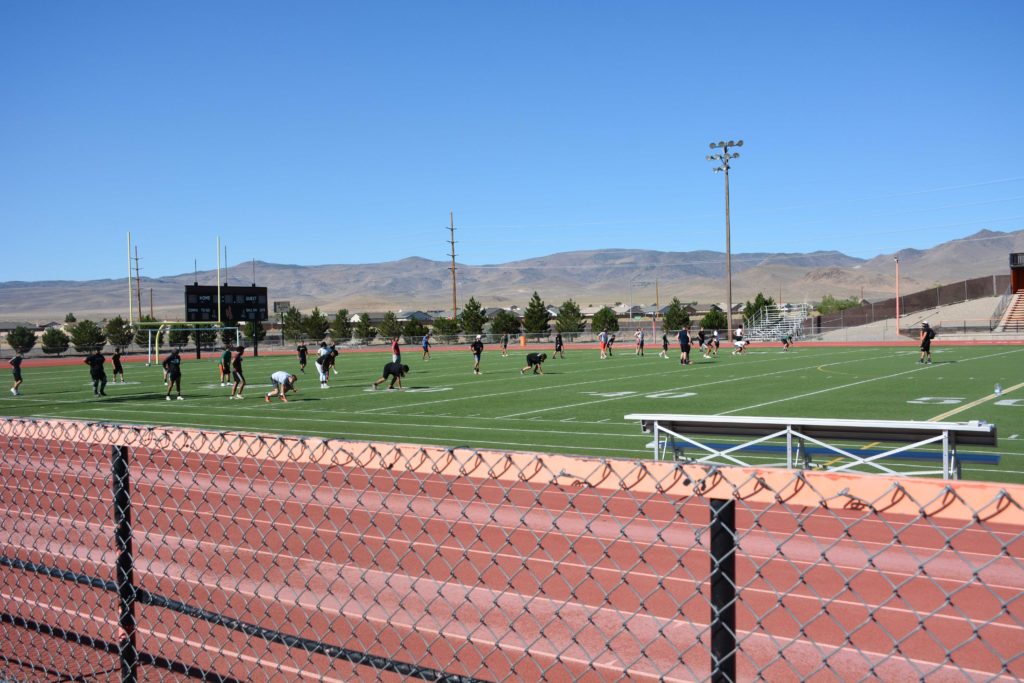
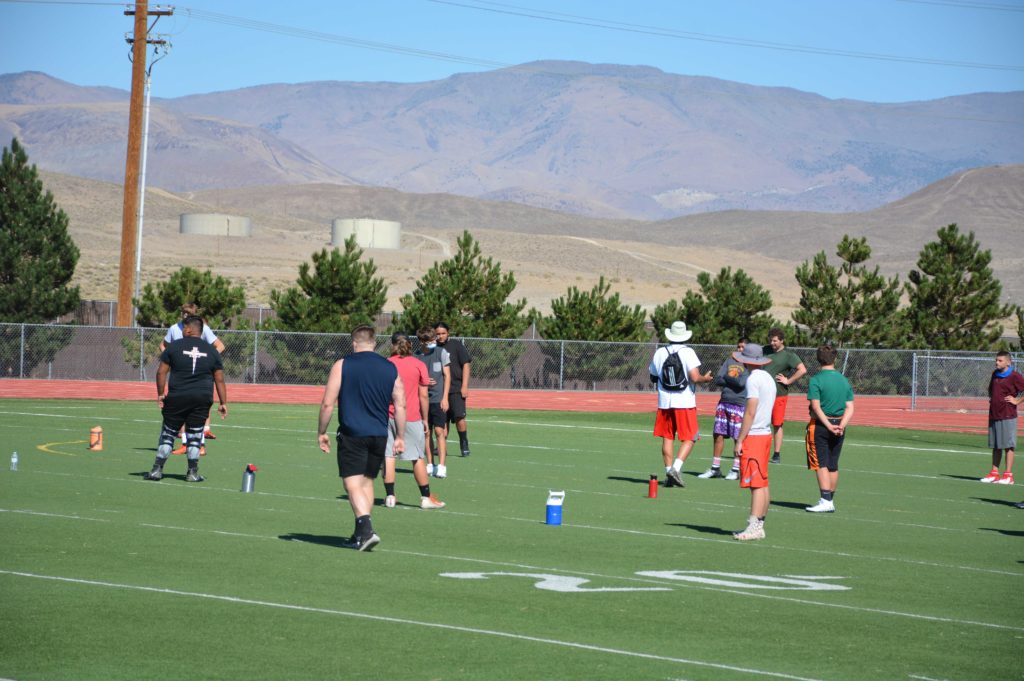
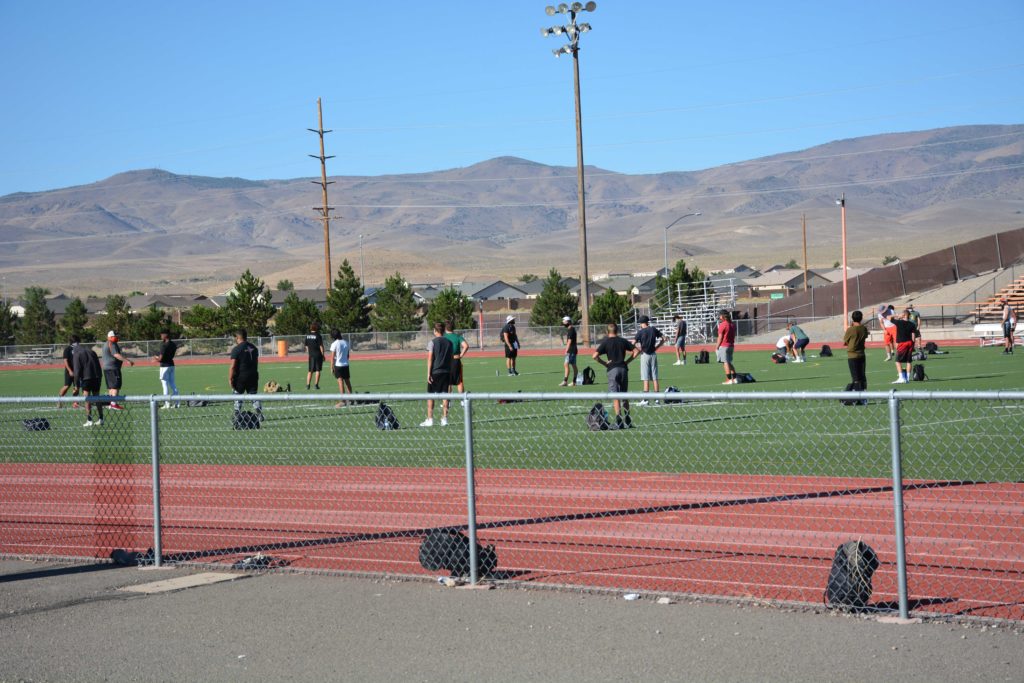
Players are divided into two larger groups, with one group on the football field and the other on the grass field. Ward said the largest group so far has been 41, which has allowed the larger group to be divided into pods of between six and eight.

“If there is a positive test, we would have to quarantine those kids in that pod,” Ward said.

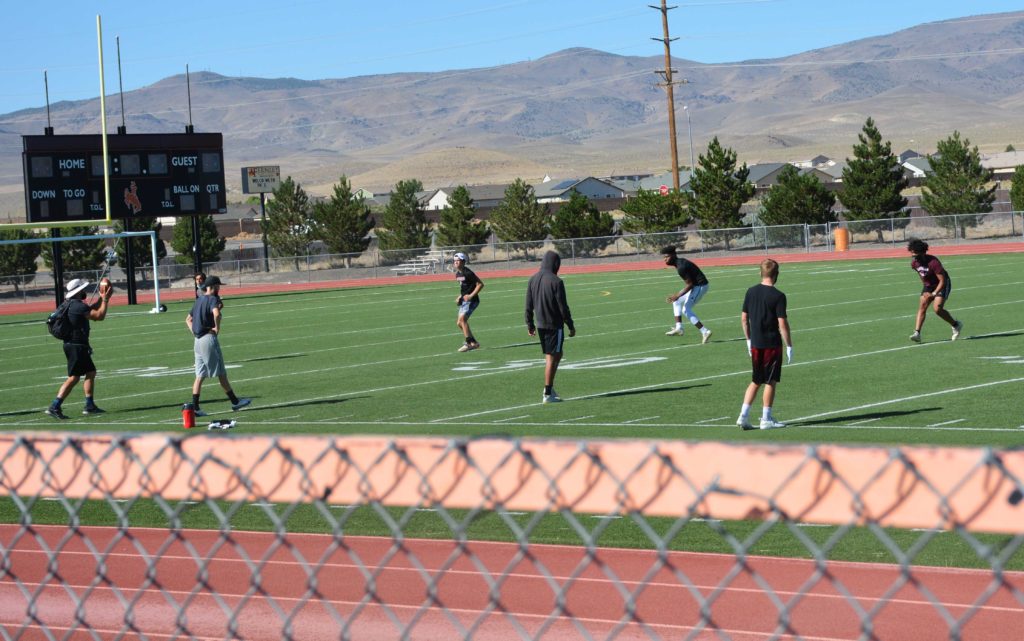
During workouts, players are assigned spots on the field in their small group, and they travel in a pack between workout stations.

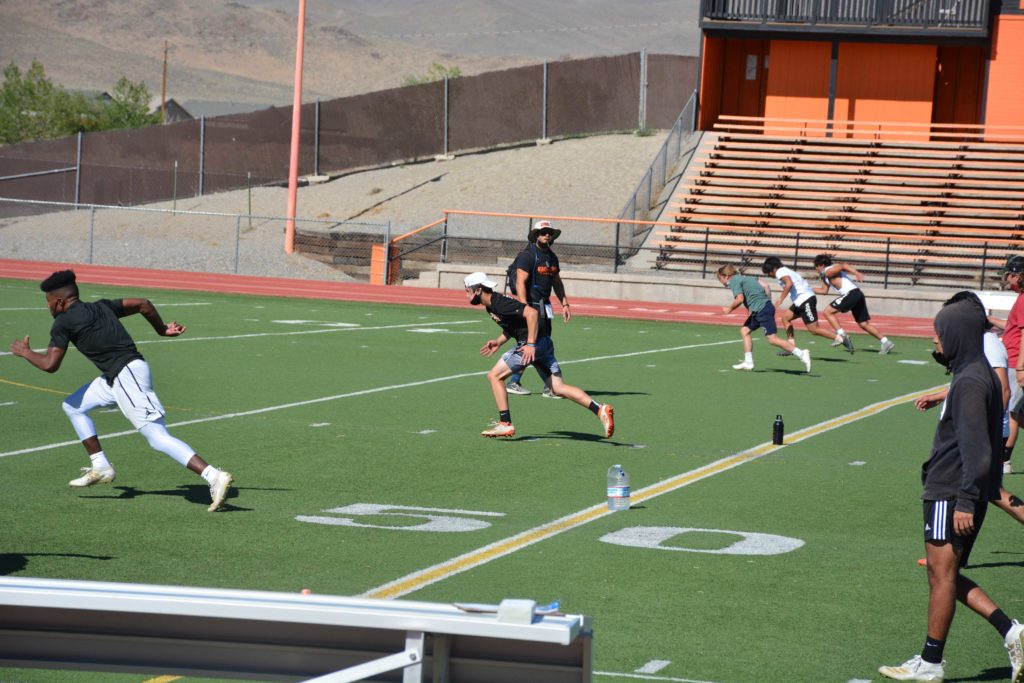
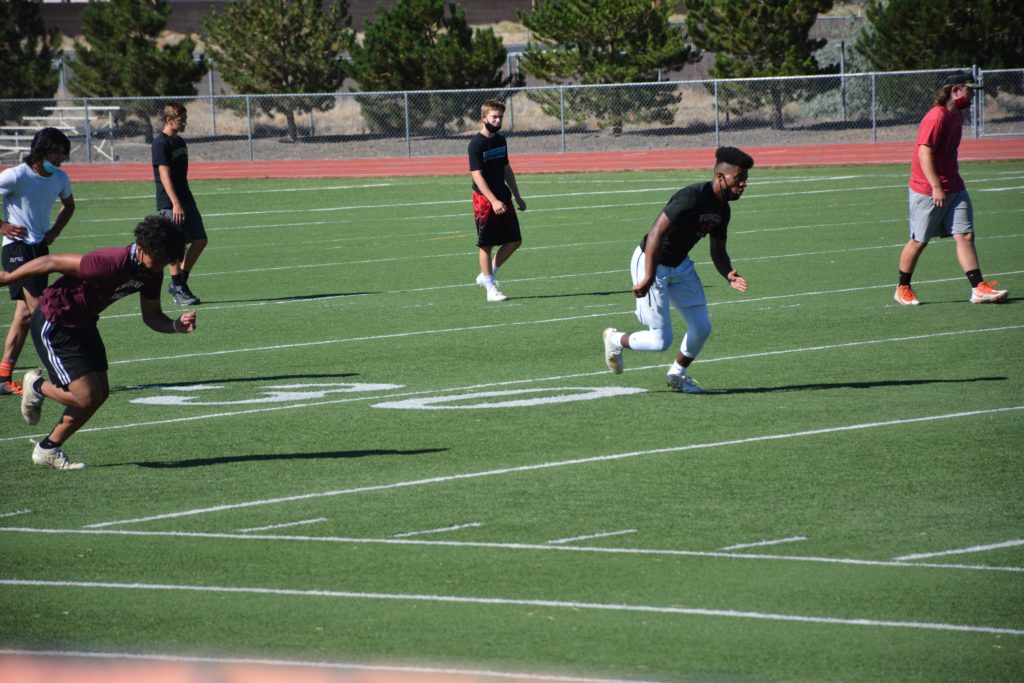
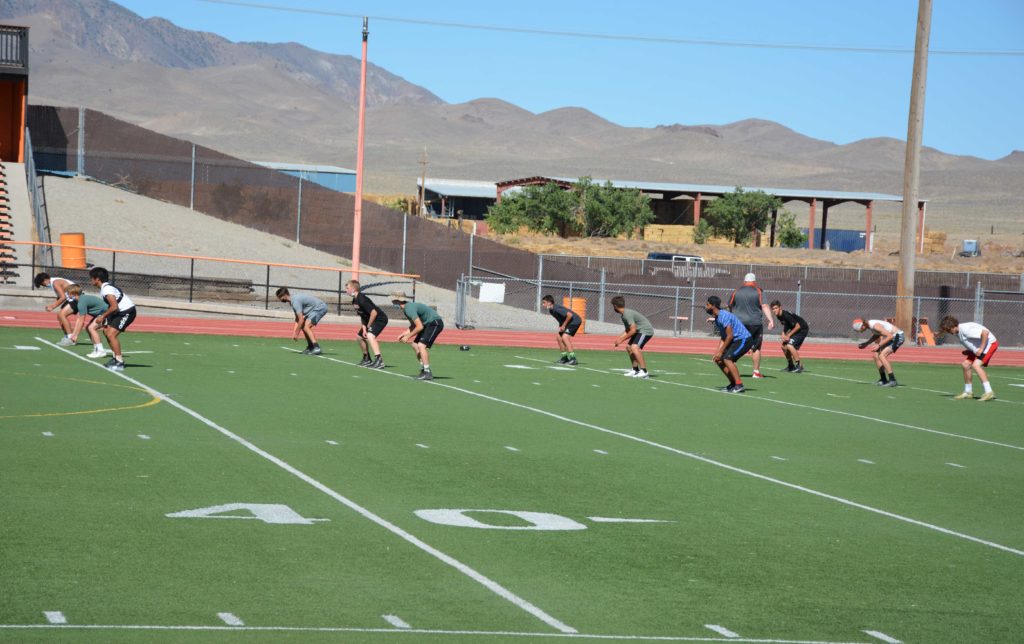
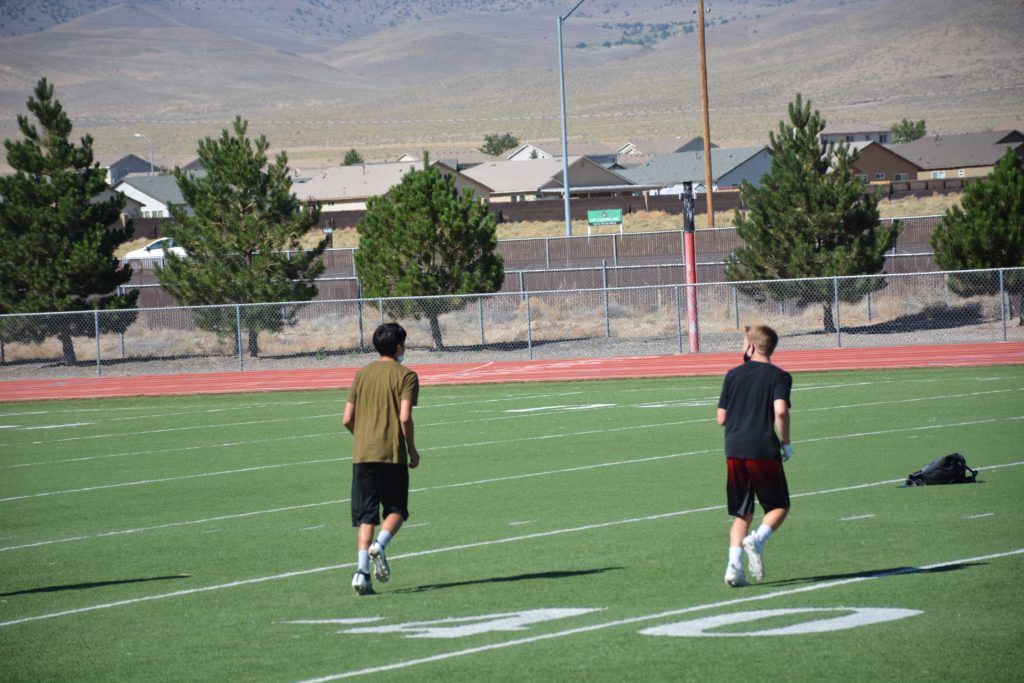
For sprints and other exercises, players in one pod line up across the width of the field at least six feet apart, with the other pods waiting their turns five yards behind each other.

But dividing players into more groups also requires more of the coaches.

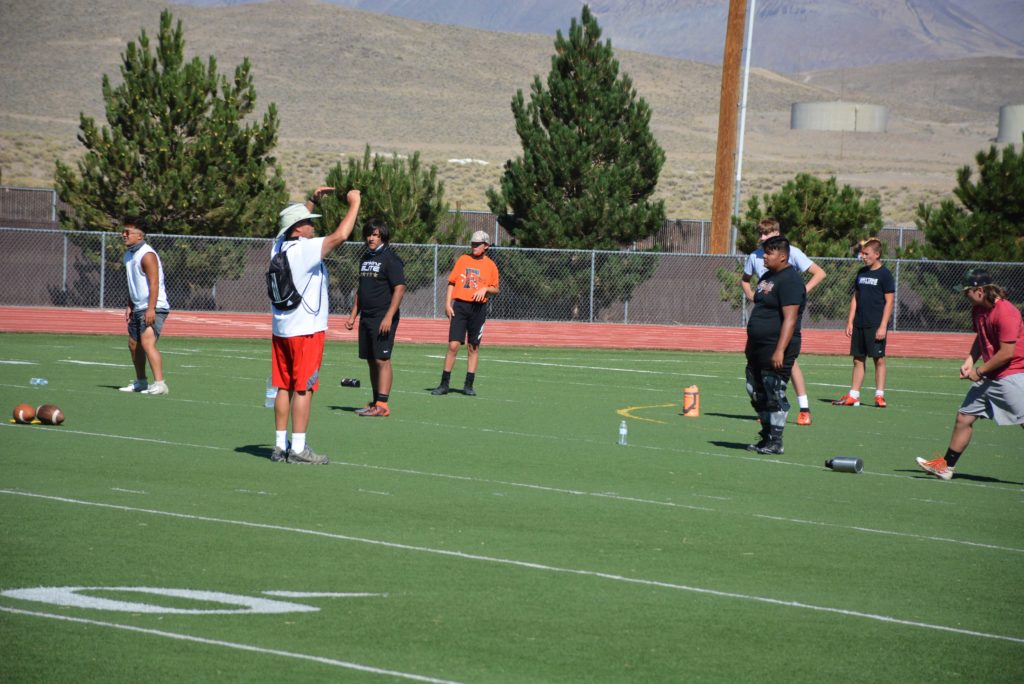
“I’m asking a lot of our coaches,” Ward said. “I need at least four of them at all times, and then we’re keeping our distance with them.”

After endurance training, the larger groups break apart into their pods for individual work in agility stations using equipment like hoops and cones.

With no contact, the work is focused solely on speed and strength, Ward said, with only a little fundamental work. That means no sleds or blocking pads, and most of the time, no footballs.

Drills for offensive linemen are focused on footwork and technique, such as their three-step blocking progressions.

“We’re not doing mesh, because that would violate social distancing,” Ward said.

As long as restrictions continue to allow, conditioning workouts will continue through July 28.

As of now, the team is scheduled to receive its equipment July 29, followed by three days of heat acclimation practices, with helmets allowed but no pads, starting July 30.

Double day workouts in helmets and shoulder pads are scheduled for August 3-5, then full gear workouts start August 6.

The Vaqueros are scheduled to scrimmage at Galena August 14, and host Bishop Union (Calif.) in their season opener Aug. 21.

But whether any of that will happen as scheduled, or if at all, is anyone’s guess.

“We hope so, because we’ve got a good group of kids,” Ward said. “We think we could have another outstanding season.”

But if social distancing guidelines, or limits on the number of people allowed in gatherings are not relaxed, will players be allowed to line up in formation and practice plays? Will handoffs and passes, blocking and tackling, be allowed?

In the end, it could all be preparation for a season that never happens.

“We worry about that all the time,” Ward said.

Share
Rate

Comment

Comments

COMMENTS
Comment author: John Mueller Comment text: FERNLEY’S WATER EMERGENCY: FIVE QUESTIONS STILL NEED ANSWERS The November 12 Fernley Reporter article provides a good recap of the November 3 water emergency and the November 4 City Council meeting. First, credit where credit is due. Our city employees responded, restored operations, and took precautions to protect residents. That’s important and appreciated. But fixing the immediate problem isn’t the same as preventing it from happening again. There are five reasonable questions our community deserves answers to: 1. WHAT ACTUALLY FAILED? What was the root cause of the water treatment plant’s communication failure, and why didn’t the backup systems prevent the interruption? 2. HOW CLOSE WERE WE TO A REAL EMERGENCY? How much usable water remained in storage, and how close did we come to affecting essential services, including firefighting? 3. WHAT WILL THIS COST TAXPAYERS AND RATEPAYERS? What did the emergency cost, what additional repairs or upgrades are necessary, and how will they be funded? 4. WHO IS RESPONSIBLE FOR MAKING SURE IT DOESN’T HAPPEN AGAIN? Is there a written corrective-action plan with assigned responsibilities, measurable results, and completion deadlines? 5. HOW WILL RESIDENTS KNOW THE PROBLEM IS REALLY FIXED? Will the city publish an after-action report explaining what happened, what was learned, what has been corrected, and what still needs attention? This isn’t about pointing fingers or finding someone to blame. It’s about learning, improving, and protecting our community. We can appreciate the city’s response while still expecting transparency, accountability, and a commitment to continuous improvement. Some technical information may need to remain confidential for security reasons. But that shouldn’t prevent residents from understanding the risks, the corrective actions, and the results. The real question isn’t whether Fernley recovered from the November 3 emergency. We know it did. The question is: If the same failure happened tomorrow, would we be better prepared? That’s a conversation worth having. Our community deserves more than reassurance. It deserves measurable results. Comment publication date: 11/12/26, 1:54 PM Comment source: Fernley Council Addresses Water Emergency Comment author: Donald DeVold Comment text: Great article It’s actually spelled DeVold Thank you Comment publication date: 10/29/26, 4:58 PM Comment source: The great robbery: Strip-6 by Solis helps Vaqueros punch playoff ticket Comment author: CH Comment text: I want to start a betting 'pool' for the October, November, and December closures: 1. A dent in the pool slide. 2. A failed breaker. 3. A pebble loose in the water part (replacing all concrete) 4. Hurricane Polo makes a sudden turn and blows off the roof (again). With soft muscles after 7 months of no swimming, the only health left is my sense of humor :) Comment publication date: 10/1/26, 11:18 AM Comment source: Fernley Pool Renovation Moves Forward, One Test at a Time Comment author: PFB Comment text: Why can't you guys find competent contractors.. For a large municipal facility like the indoor-outdoor Fernley Swimming Pool located at 300 Cottonwood Lane, a complete ground-up commercial build or major structural renovation typically spans 6 to 12 months or longer when factoring in large-scale engineering, public municipal permitting, specialized commercial HVAC/roofing, and health department inspections. The current renovation has been- The Fernley Swimming Pool has been closed for approximately six to seven months since late February 2026 for a major roof replacement and facility renovation. Now you sat October. Soooo 8 months for a new roof. The picture shows no other renovations. Comment publication date: 9/17/26, 7:14 PM Comment source: Electrical problem delays Fernley pool opening Comment author: P Comment text: Relative of the Mayor is to over see this site. Anyone who knows Fernley KNOWS this is more of the who you are related to and know business in this town. VOTE THEM ALL OUT AND THE CALIFORNIA TRANSPLANTS. Comment publication date: 9/16/26, 10:31 PM Comment source: Lift Station Failure Released Untreated Sewage Comment author: Christopher Walsh Comment text: Could you look into the strong recurring smell around Fernley? It smells like sewage and it can be bad enough that people don’t want to be outside or open their windows. It would be helpful to get an investigative journalist help the Fernley residents get a clear answer from the City, NDEP, and any involved facilities. I was really disappointed that the smell was not disclosed by my realtor when I moved here. I enjoy Fernley and am seeing the improvements that are being made. With Appreciation Comment publication date: 9/12/26, 2:49 PM Comment source: Sewage spill near City of Fernley Municipal Well 9