Go to main contentsGo to main menu
Saturday, November 14, 2026 at 12:30 AM

OP-ED "Rebuilding infrastructure vital for rural Nevada"

OP-ED "Rebuilding infrastructure vital for rural Nevada"


Phil Cowee, Nevada State Director, USDA Rural Development

Some people remember when many rural households didn’t have electricity or running water. Although those days are long gone for most, there’s still lots of room for improvement. In fact, our American infrastructure used to be the envy of the world, but now it’s in disrepair.

This is why President Trump has made it a priority to rebuild America’s infrastructure. He proposes to devote $50 billion, which is 25 percent of new federal money, to improving infrastructure in rural America. This is an unprecedented commitment. His proposal will stimulate at least $1.5 trillion in infrastructure investments over the next decade.

As Congress takes up the President’s infrastructure proposal, I am delighted to share with you some great news right now. Included in the FY 2018 budget bill that Congress just passed and President Trump signed in March is a robust investment of $600 million in rural broadband. These funds will serve as a “down payment” on the President’s full, comprehensive infrastructure funding proposal that will be further deliberated over the coming months.
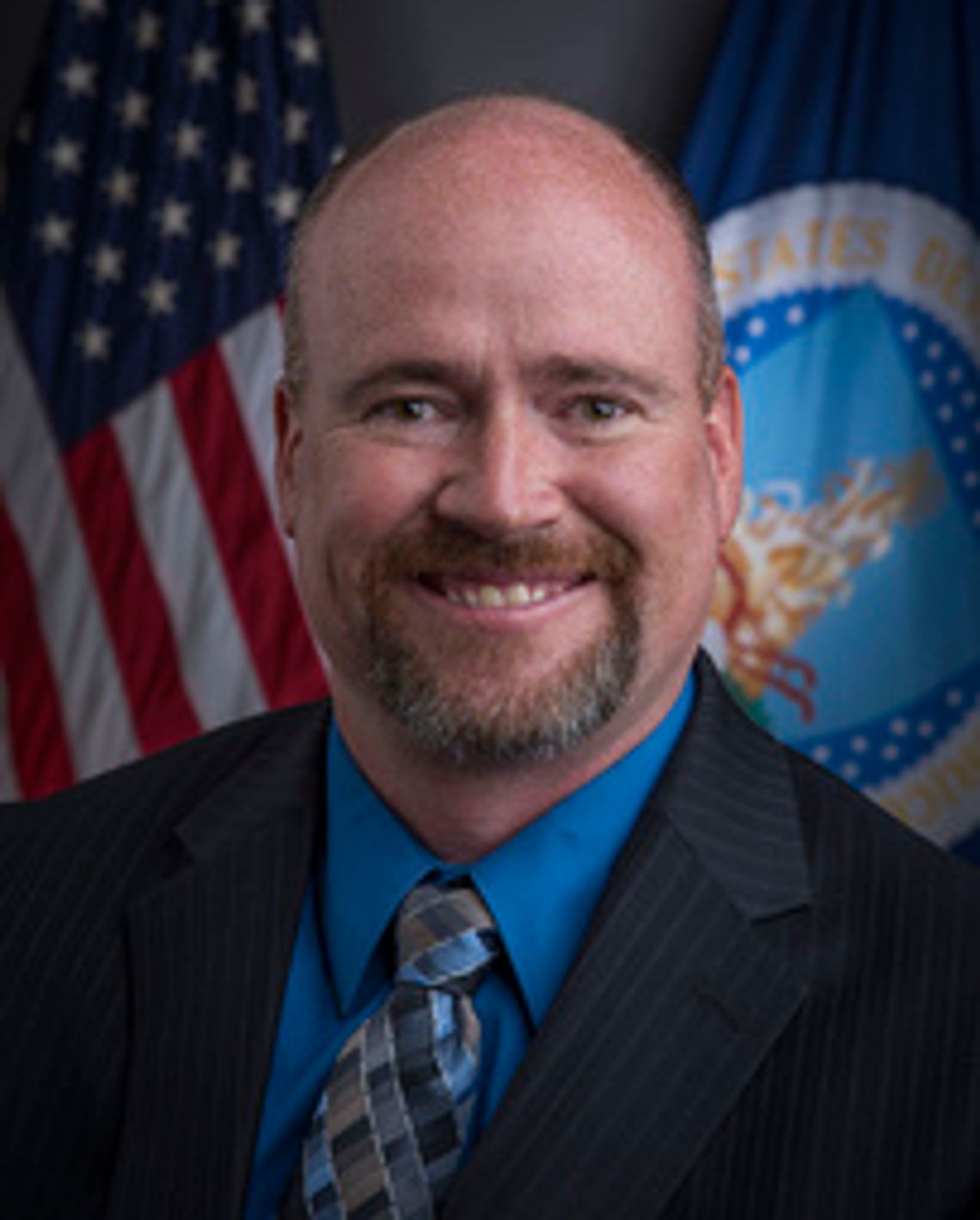
Phil Cowee


USDA will use these new rural broadband funds to administer a new program that will begin to meet the Administration’s goals of bringing reliable and affordable broadband e-Connectivity to America’s rural towns, cities and tribal areas. Today, 80 percent of the 24 million American households that do not have 21st century high-speed internet are in rural areas, according to the Federal Communications Commission. That is unacceptable. America can do better for our rural citizens and for rural production sites that need e-Connectivity to continue to supply the nation and the world with food, fiber, minerals and manufactured products.

As we set up the new program, USDA will work diligently to ensure that the broadband e-Connectivity projects provide the most “bang for the buck” and improve access for as many rural American homes, businesses, farms, schools and health care centers as possible.

Every day, I see firsthand the tremendous difference USDA Rural Development makes by investing in rural infrastructure. Here in Nevada, USDA funded a $12 million combination loan and grant that is helping Storey County replace its aged and failing wastewater collection system. This project protects the health of residents and the environment, while supporting the tourism economy in the historic district.

USDA has also invested over $41 million in broadband projects in places like remote Elko County and Esmeralda County--communities that would otherwise go completely without any kind of service. This included $25 million in infrastructure loans to small rural telephone companies $2.5 million in Distance Learning Telemedicine loans and grants for universities and community colleges, rural school districts, Tribes, and medical clinics, $3 million for Community Connect Grants to provide community connectivity in small towns and $11 million in Broadband Initiative Program for infrastructure improvements. Without USDA, many areas would simply be without broadband or internet.

These investments are the result of strong partnerships that USDA has formed over the years with local business and civic leaders.

In addition to providing infrastructure financing, USDA is addressing statutory changes, regulatory relief and cultural shifts to help improve the way the Federal government serves its citizens. This approach is consistent with the Secretary’s priorities: Infrastructure, Partnerships and Innovation. All three are needed to rebuild this great nation.

During the next few weeks and months – and throughout my term – I will be meeting with business owners, developers, elected officials and rural residents to learn about your infrastructure needs and concerns. I want to hear from you about what is working – and what we can do better.

Here is how you can help: Please contact me or our team of specialists in Carson City, Nevada, to let us know of your community’s infrastructure needs. I can be reached by phone at (775) 887-1222 Ext. 4751.

Together, we can ensure that USDA investments in rural infrastructure will create jobs, expand economic opportunities and help ensure that rural communities continue to be great places to live, work, start a business and raise a family.

It’s an honor to serve you.

Philip Cowee, a businessman and sixth-generation Nevadan was named state director for USDA Rural Development in Nevada effective Nov. 13, 2017.

Cowee is a Certified Public Accountant (CPA) with nearly 20 years of professional experience developing properties and running businesses in Lyon County. He has entitled and developed many commercial and industrial projects, and lead the Lyon County School District as Finance Director from 2012-2016.

He has volunteered on the Dayton Regional Advisory Council and with youth sports.  Cowee and his wife live in Dayton with their five children.

Share
Rate

Comment

Comments

COMMENTS
Comment author: John Mueller Comment text: FERNLEY’S WATER EMERGENCY: FIVE QUESTIONS STILL NEED ANSWERS The November 12 Fernley Reporter article provides a good recap of the November 3 water emergency and the November 4 City Council meeting. First, credit where credit is due. Our city employees responded, restored operations, and took precautions to protect residents. That’s important and appreciated. But fixing the immediate problem isn’t the same as preventing it from happening again. There are five reasonable questions our community deserves answers to: 1. WHAT ACTUALLY FAILED? What was the root cause of the water treatment plant’s communication failure, and why didn’t the backup systems prevent the interruption? 2. HOW CLOSE WERE WE TO A REAL EMERGENCY? How much usable water remained in storage, and how close did we come to affecting essential services, including firefighting? 3. WHAT WILL THIS COST TAXPAYERS AND RATEPAYERS? What did the emergency cost, what additional repairs or upgrades are necessary, and how will they be funded? 4. WHO IS RESPONSIBLE FOR MAKING SURE IT DOESN’T HAPPEN AGAIN? Is there a written corrective-action plan with assigned responsibilities, measurable results, and completion deadlines? 5. HOW WILL RESIDENTS KNOW THE PROBLEM IS REALLY FIXED? Will the city publish an after-action report explaining what happened, what was learned, what has been corrected, and what still needs attention? This isn’t about pointing fingers or finding someone to blame. It’s about learning, improving, and protecting our community. We can appreciate the city’s response while still expecting transparency, accountability, and a commitment to continuous improvement. Some technical information may need to remain confidential for security reasons. But that shouldn’t prevent residents from understanding the risks, the corrective actions, and the results. The real question isn’t whether Fernley recovered from the November 3 emergency. We know it did. The question is: If the same failure happened tomorrow, would we be better prepared? That’s a conversation worth having. Our community deserves more than reassurance. It deserves measurable results. Comment publication date: 11/12/26, 1:54 PM Comment source: Fernley Council Addresses Water Emergency Comment author: Donald DeVold Comment text: Great article It’s actually spelled DeVold Thank you Comment publication date: 10/29/26, 4:58 PM Comment source: The great robbery: Strip-6 by Solis helps Vaqueros punch playoff ticket Comment author: CH Comment text: I want to start a betting 'pool' for the October, November, and December closures: 1. A dent in the pool slide. 2. A failed breaker. 3. A pebble loose in the water part (replacing all concrete) 4. Hurricane Polo makes a sudden turn and blows off the roof (again). With soft muscles after 7 months of no swimming, the only health left is my sense of humor :) Comment publication date: 10/1/26, 11:18 AM Comment source: Fernley Pool Renovation Moves Forward, One Test at a Time Comment author: PFB Comment text: Why can't you guys find competent contractors.. For a large municipal facility like the indoor-outdoor Fernley Swimming Pool located at 300 Cottonwood Lane, a complete ground-up commercial build or major structural renovation typically spans 6 to 12 months or longer when factoring in large-scale engineering, public municipal permitting, specialized commercial HVAC/roofing, and health department inspections. The current renovation has been- The Fernley Swimming Pool has been closed for approximately six to seven months since late February 2026 for a major roof replacement and facility renovation. Now you sat October. Soooo 8 months for a new roof. The picture shows no other renovations. Comment publication date: 9/17/26, 7:14 PM Comment source: Electrical problem delays Fernley pool opening Comment author: P Comment text: Relative of the Mayor is to over see this site. Anyone who knows Fernley KNOWS this is more of the who you are related to and know business in this town. VOTE THEM ALL OUT AND THE CALIFORNIA TRANSPLANTS. Comment publication date: 9/16/26, 10:31 PM Comment source: Lift Station Failure Released Untreated Sewage Comment author: Christopher Walsh Comment text: Could you look into the strong recurring smell around Fernley? It smells like sewage and it can be bad enough that people don’t want to be outside or open their windows. It would be helpful to get an investigative journalist help the Fernley residents get a clear answer from the City, NDEP, and any involved facilities. I was really disappointed that the smell was not disclosed by my realtor when I moved here. I enjoy Fernley and am seeing the improvements that are being made. With Appreciation Comment publication date: 9/12/26, 2:49 PM Comment source: Sewage spill near City of Fernley Municipal Well 9